
Our story
Technology has always fascinated us. Stereo systems, video recorders, computers, mobile phones. We explored what we could do with them; we took them apart. And we were always just a bit ahead of our peers and more passionate about them. Whilst others just played games on computers, we tinkered with them. We bought spare parts. We programmed software to make our schoolwork easier. We used our computers to produce music and design flyers and posters. Sometime during secondary school, our founders, Joris and Nils, found each other through that shared love of technology and creativity.
The human standard is increasingly fading into the background.
We’re still mad about tech – anything with a screen and buttons. We keep up with the latest product launches and can’t wait to try everything out straight away. We believe in the opportunities offered by the digital revolution. But however much we love technology and however much we enjoy using it, sometimes we’d quite like to take a break from it. Because there’s a downside too. We’re addicted. We find it hard to put our phones down. We watch just one more – no, two more – episodes of our favourite series. Even when we don’t really have the time. We also see how our children deal with it. How companies try to snatch as much of our attention as possible. How the rapidly changing (digital) world leaves people behind who can no longer keep up. It started with our grandparents, who couldn’t figure out the TV remote control. With our parents, who can no longer operate the lights in our home. And we’re seeing it more and more often in people our own age. The train of digitalisation is thundering on and expects everyone to stay on board. Adapt or be left behind. We see how errors and biases in algorithms are ruining lives. In short: the human standard is fading further and further into the background.
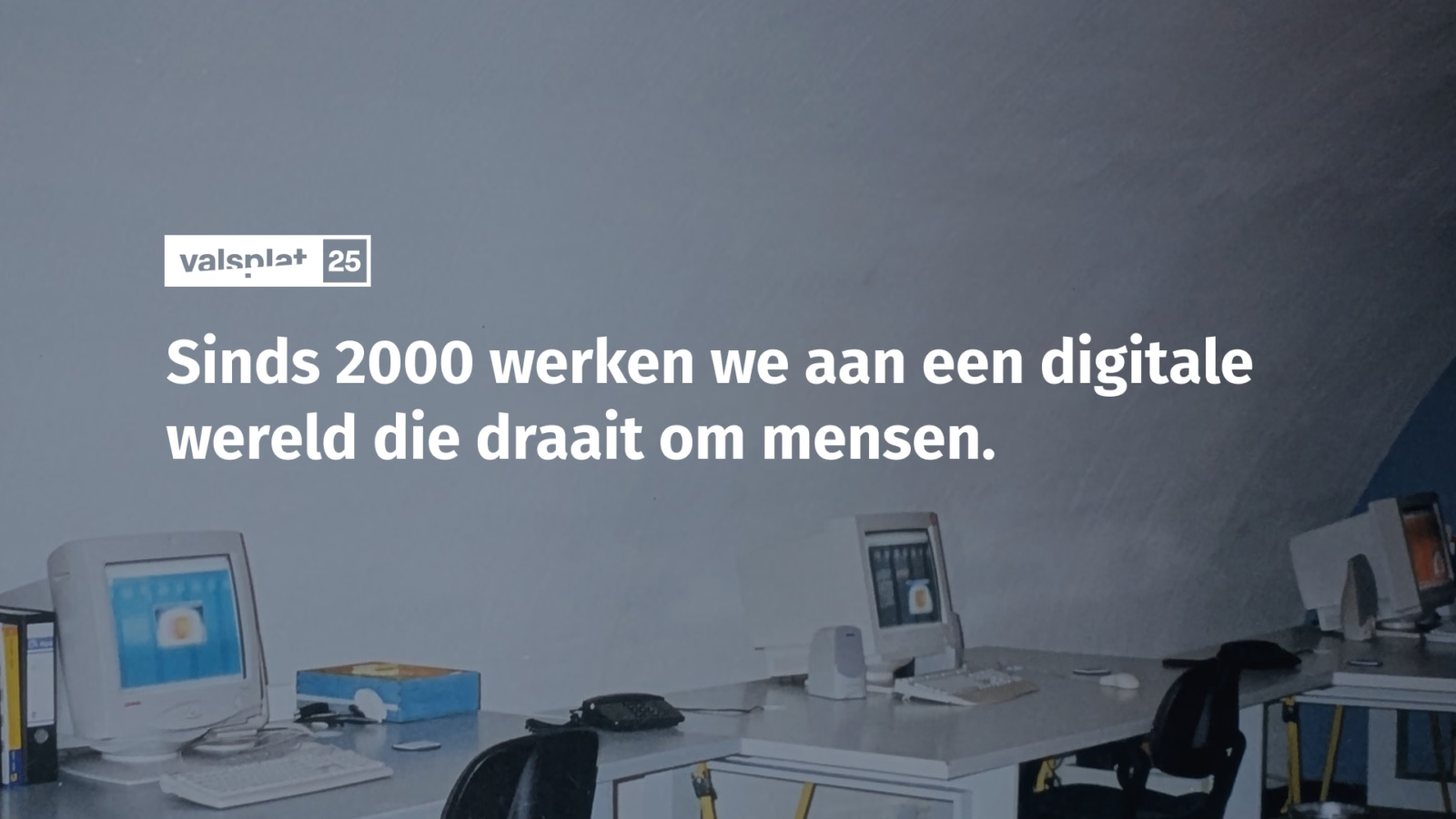
And that human standard in technology – that’s exactly what it was all about for us when we started Valsplat in a shipyard cellar in Utrecht back in 2000. The digital world was still in its infancy, and so were we. The challenges were manageable. It was a time when everyone wanted to do something with that fascinating new technology, but there weren’t really any revenue models in place yet. Out of sheer enthusiasm, people focused purely on the technology or the sleek design, on what was possible. Designers were barely considering the human aspect, and organisations weren’t focusing on the value for the end user. You might remember: websites were really just digital brochures. At first, they mainly consisted of text and links, but they soon became cluttered and flashy – far too flashy. Nobody really stopped to consider the fact that on the other side of the screen there was someone who had to be able to make sense of it all: the customer, or the user. That’s where we stepped in. We conducted research with end-users and applied what we learnt to our designs. We held up a mirror to organisations and encouraged them to look at their digital presence from the users’ perspective.
The digital world has become cold, harsh and impersonal. And that hurts us.
It’s now been 25 years. Tech has come a long way in that time. The digital world has matured at breakneck speed; the challenges we face have grown just as rapidly. It’s no longer simply a matter of making websites, apps and digital products user-friendly. The issues at stake have become far more fundamental. The digital world is driven by the interests of ever-larger tech companies, which understand very well how to turn services and products for their users into hard cash. People’s sustainable, long-term interests play no part, or at most a minimal one, in their thinking. The digital world has become cold, hard and business-like. And that hurts us. It’s a stark contrast to how the internet once began: it was a place where enthusiasts treated each other kindly and respectfully. A cheerful environment where you could discover new things. Meanwhile, it has become a world where your attention is a commodity for big business. A world in which you are constantly being tempted and even misled.
Digitalisation or digital transformation is almost never driven by human needs: it’s all about efficiency, about money. It’s meant to make real-world processes cheaper. Large-scale IT projects are funded by the savings they are expected to deliver. Services provided by people for people are being cut back. As a result, personal contact with an organisation’s staff is becoming increasingly difficult. People come up against digital barriers and are left to sort things out online – even if they can’t manage it. It’s incredibly complicated to get past chatbots and speak to someone who takes your problem seriously. Someone who really helps you. Someone who sees you. Just person to person.
More and more people are unable to find their way around online. And there are all sorts of reasons for this. It may be that they lack the necessary skills. Or because they don’t have access to a good internet connection or new devices – not everyone can afford the latest iPhone. Sometimes the cause lies in a physical or mental disability, which isn’t taken into account in the digital world. For a very large, diverse group of people, careless and inhumane digitalisation is making it increasingly difficult to participate in society independently and self-reliantly. A digital divide has emerged, with the ‘digital haves’ on one side and the ‘digital have-nots’ on the other. And that divide is growing every day: the haves are advancing at breakneck speed, whilst the have-nots are being left behind.
If we look at the state of the digital world, we see a parallel with the early 1970s and the emerging technology of that time: the car. Things were going well in the Netherlands; more and more people could afford a car. There was unshakeable confidence in the opportunities this offered for the economy. Entire city centres were demolished to make way for our four-wheelers; accessibility took precedence over everything else. But there was a downside: by making cities so accessible to cars, the human standard gradually disappeared. Until a journalist lost his six-year-old child in a road traffic accident. His personal tragedy (and that of many others) led to the founding of the campaign group ‘Stop de Kindermoord’. The group campaigned passionately for road safety and the redesign of streets, to protect children from the increasing volume of traffic. This movement gained so much momentum that we are now reaping the benefits. Safe spaces for cyclists and pedestrians have been restored to our streets. People are making good use of them: in the Netherlands, you usually don’t take the car for short distances. That means far fewer cars on the road.
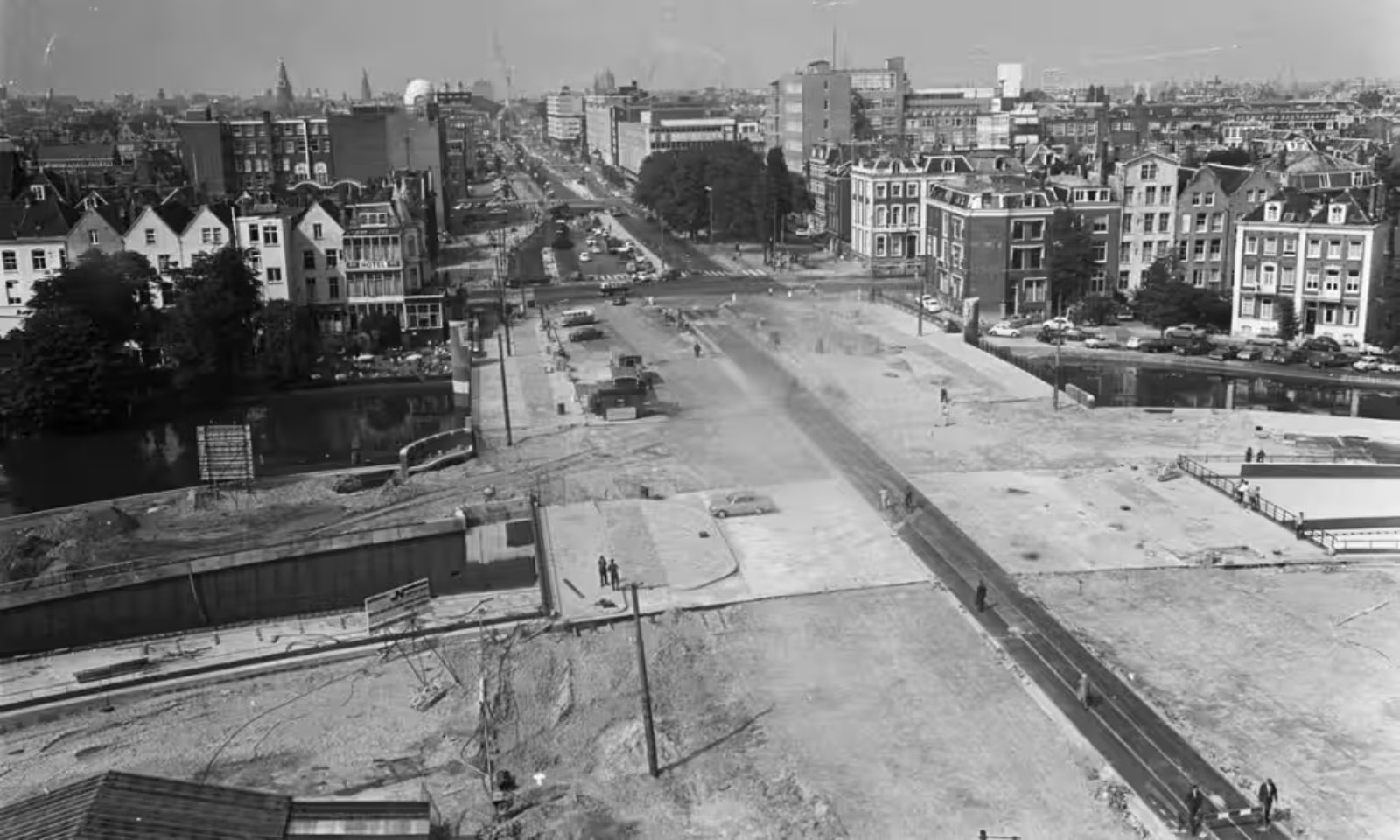
The Netherlands’ urban infrastructure is now among the best in the world. Nowhere else are accessibility, safety and quality of life so well balanced. In most inner-city and suburban areas in the Netherlands, you can get around safely and quickly by car, public transport, on foot or by bike. From the heart of city centres to the smallest village centres, from rural areas to industrial estates. This is no coincidence, but the result of decades of deliberate policy. There are thick manuals full of guidelines and best practices when it comes to building infrastructure, all drawn up with the human standard in mind. Based on the premise that people make mistakes and do not automatically follow the rules. Roads must therefore be forgiving and clearly indicate how they should be used. The road tells you how fast you can go and who it is for. And there is always consideration for all road users, big and small, strong and vulnerable. Even if you don’t have a car, the Netherlands is a great place to get about. Just take a look around, and you’ll see it everywhere.
It’s important to remember: the philosophy, guidelines and policies surrounding infrastructure didn’t just come about by themselves. They were, amongst other things, driven by citizens who took action and then translated into guidelines and policies by people with a vision. Visit an average suburb in any other well-developed country and you’ll realise just how fortunate we are.
Together, we have a duty to approach digitalisation in an ethical and responsible manner.
In the online world, we find ourselves at a crossroads similar to that which existed during the rise of the car. We are rapidly dismantling existing non-digital infrastructure. Everything must make way for our new digital systems and processes. In many cases, we are doing this recklessly, without giving proper thought to the consequences. We have already gone too far. All the wonderful things that digital technology has brought us in recent times have a dark downside. But we can still turn things around. We can still take action now and lay a healthy, sustainable foundation for the future. The rise of the car shows that if you think solely in economic terms, you create dangerous situations. If you put the human standard first, you create a pleasant environment that works for everyone.
The essence of our work has never changed: making the digital world more human. But as you’ve just read, the standard has certainly changed. We face enormous challenges. And to tackle those challenges, we need everyone. Every creator, designer and decision-maker in the digital world. Together, we have a shared responsibility and a moral duty to take action, to approach digitalisation in an ethical and responsible manner. In this book, we’ll guide you through the subject and delve deeper into the digital divide, our relationship with technology, and how we design. We interviewed experts in various fields to hear their perspectives on the matter, and to understand their ideals and concerns. After reading this book, you’ll have a clear understanding of where the challenges lie. But, above all, it will be clear what opportunities we can seize. Because the path of technology that lies ahead of us offers enormous opportunities. As long as we keep the human standard in mind. If we use technology to enhance wellbeing, equality and connection, we can create a future in which innovation serves society rather than driving it apart. It is up to us to set the course.

Let's have a chat
Nils van den Broek — Founder
Send message via LinkedIn Schedule a meeting nils@valsplat.nl
Weg van Tech
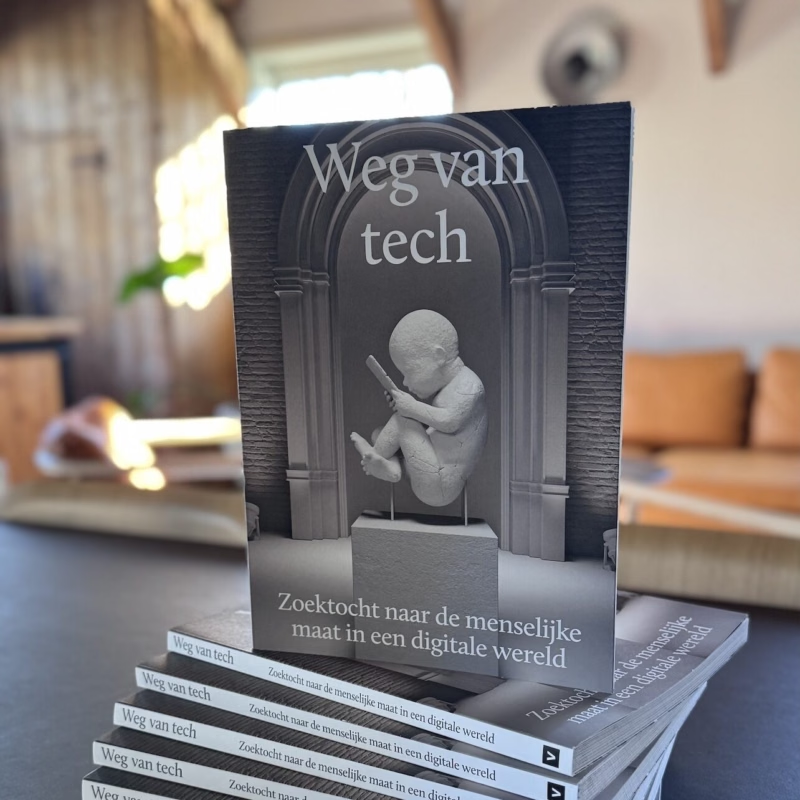
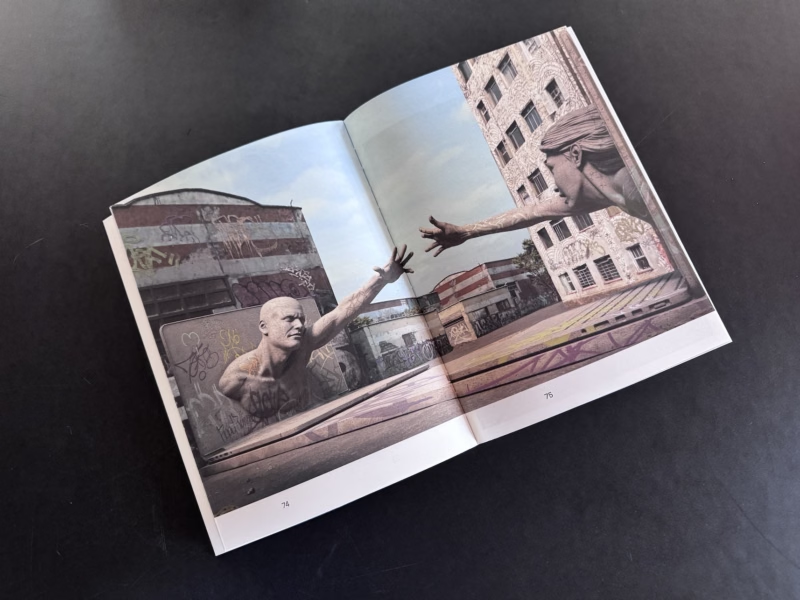
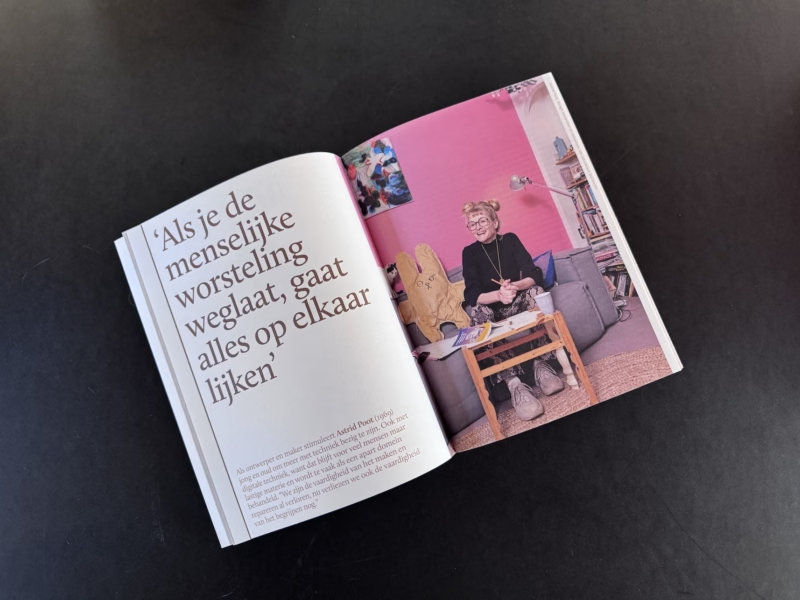
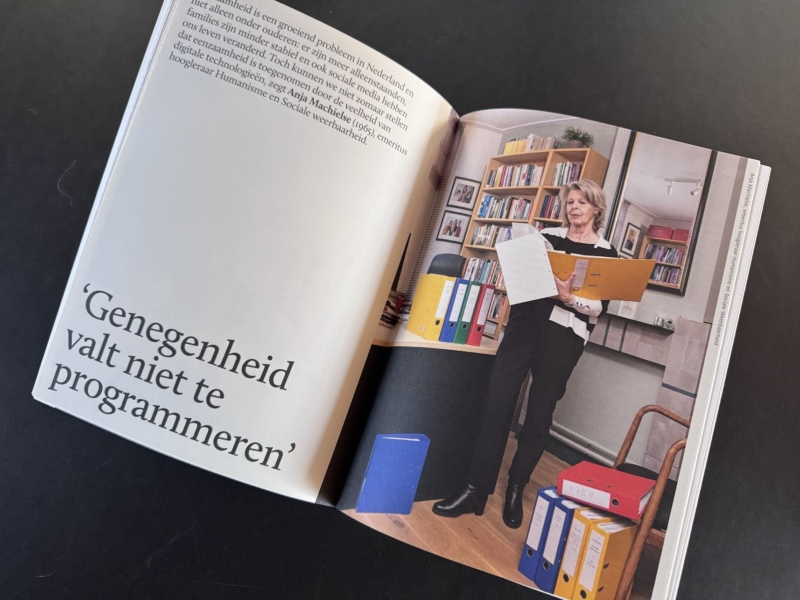
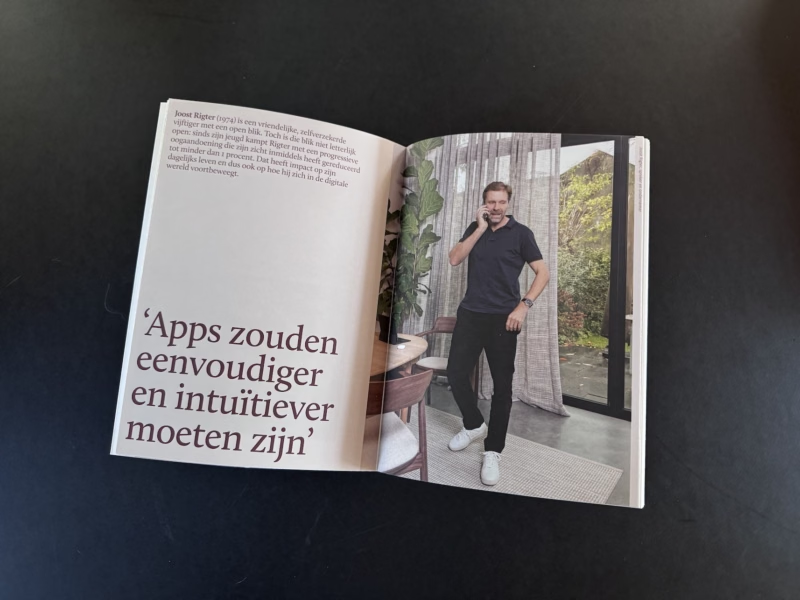
To mark our 25th anniversary, we published a book. In ‘Weg van Tech’, we describe our quest for the human standard in a digital world. Through 18 interviews with leaders, scientists, artists, entrepreneurs and ordinary Dutch people, we explore how technology can once again serve humanity.
Would you like to receive a book?
We’d be happy to send you a copy, if you promise to help us make the digital world a little more human.