
We carry out user studies at every stage of development, showing our participants everything from sketches to finished products. We see all sorts of prototypes come and go. But more often than not, the product is practically finished even though conceptual questions are still hanging in the air. By then, it is too late – or too painful – to make the necessary radical changes. Instead, these questions must be addressed the moment they arise.
Visualising a conversation
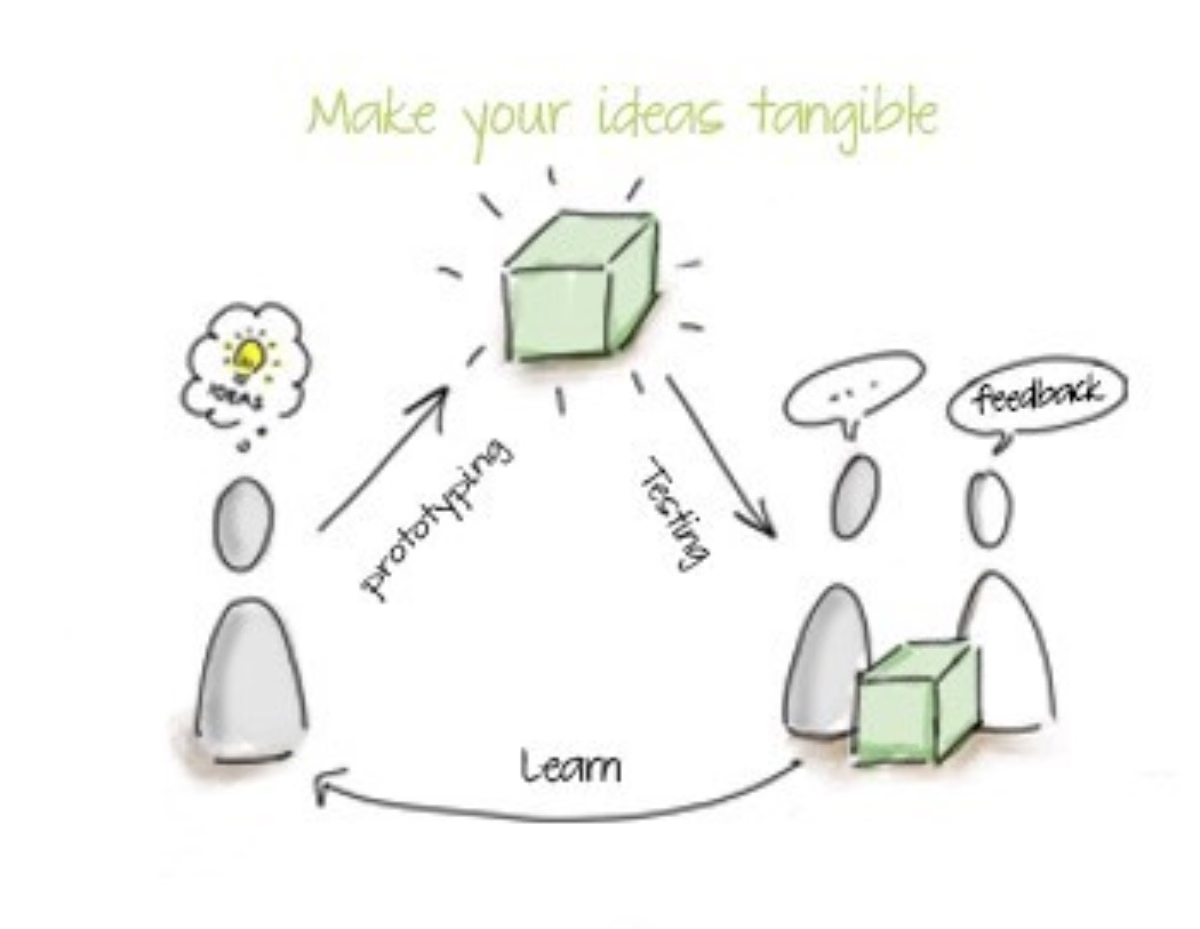
Prototyping is a way of bringing your idea(s) to life. You can start shaping it, adding or removing material until it takes shape. This is essential to ensure a successful product. Bringing your idea to life as early as possible gives you the opportunity to share it and gather feedback from your team, manager and stakeholders in order to improve it.
This also means you can involve your consumers by showing them your prototype during a user study, to find out whether they understand and value your idea. The sooner, the better. A prototype — be it on paper or digital — simulates a ‘conversation’ between your concept and consumers. Does it flow naturally, like between long-lost friends? Or is it filled with awkward silences and misunderstandings? These insights will help you refine your idea into something worthwhile, into a valuable asset in your consumers’ lives.
Criteria for a successful prototype
Using your prototype in a user study can be tricky, because the quality of your prototype and the level of detail you present determine the feedback participants will give you. Sketches address conceptual questions, whilst clickable prototypes reveal interaction issues. Depending on your questions and the stage of development you are at, you need to carefully consider which elements are required to conduct a successful study. You don’t want to spend too much time on it, but you shouldn’t rush it either.
- Flows rather than a set of pages
Teams often put together a seemingly random set of pages and request a user study. But this will elicit random feedback, because participants have nothing to work towards. Users do not visit your website simply to look at a few pages. They have a specific goal in mind. They follow a specific flow, or user story, if you will. And this is what you need to prototype.
By prototyping the most important user stories — powerful building blocks of agile projects — or flows or dialogues, you will gather valuable insights. It becomes clear whether the flow is natural or whether key elements are missing. Participants can follow a path towards their goal and show you what they need.
- Take your content seriously
It’s baffling, but content is often (unconsciously) regarded as secondary. Prototypes are crammed full of ‘lorem ipsum’. It’s baffling, because content is the only reason consumers visit your website. Your content has to be top-notch. And to achieve this, you also need to prototype your content.
Get rid of your ‘lorem ipsum’, regardless of the stage of development you’re at. It no longer exists. Instead, ensure the content — ranging from plain text to tables and tools — is realistic. This doesn’t mean it has to be final. After all, you’re still prototyping. Just keep it real.
There can also be a ridiculous debate about whether it should be ‘mobile-first’ or ‘content-first’. Unsurprisingly, we believe you need to combine both right from the start.
- Limit the visual designs
Often, a great deal of time is spent creating a prototype that fits the brand or adheres to the style guide. Apparently, it has to look ‘as real as possible’ in order to capture ‘the look and feel’ and ‘overall experience’. Nonsense! Participants are perfectly capable of working with sketches or wireframes. They often prefer it, because it looks “clean and simple”.
Limiting visual design does not mean excluding it entirely. It certainly needs to be used to establish a visual hierarchy. Participants need this to make sense of your concept. But anything more than that is overkill. Especially when you’re at the start of your project. Think of it this way: you’ll free up time by sticking to the bare minimum, which you can then use to take another look at your content.
- Ignore the conditions and potential constraints — for now
Don’t go to the legal department in advance. Don’t draw up a list of (technical) constraints. Don’t try to secure approval at every possible stage. This stifles all your creative energy, which you need to develop something new and groundbreaking.
Give yourself (and your team) time and freedom to experiment. To play. To innovate. Make the most of it. Discover and determine whether your idea has potential. Once it’s taking shape, you can consult the relevant departments. And if you’ve done it right, you’ll have gathered all the ammunition you need to counter any objections.
- Use the right tool at the right time
You must keep it as simple as possible, provided it answers your questions. Nothing more, nothing less. Use a hand-drawn paper prototype if you have conceptual questions. Participants can ‘click’ by tapping, and you will ‘operate’ the computer, showing them the next screen. Or use InVision or Marvel when you have wireframes that participants can click through. Or a programme like Axure to incorporate interactive elements such as expandable panels, mouse-over states, etc.
- Make it feel realistic
“As real as possible” is not the same as “make it feel realistic”. Participants must not realise they are working with a prototype, regardless of how it looks. They must be able to see, feel and experiment — within certain limits, of course. At the very least, they must feel as though they can do whatever they want. So please, no ridiculous PowerPoint presentations where participants have to click the ‘next’ button. Or a ‘prototype’ where the next step pops up automatically, regardless of whether they’ve clicked in the right place or not.
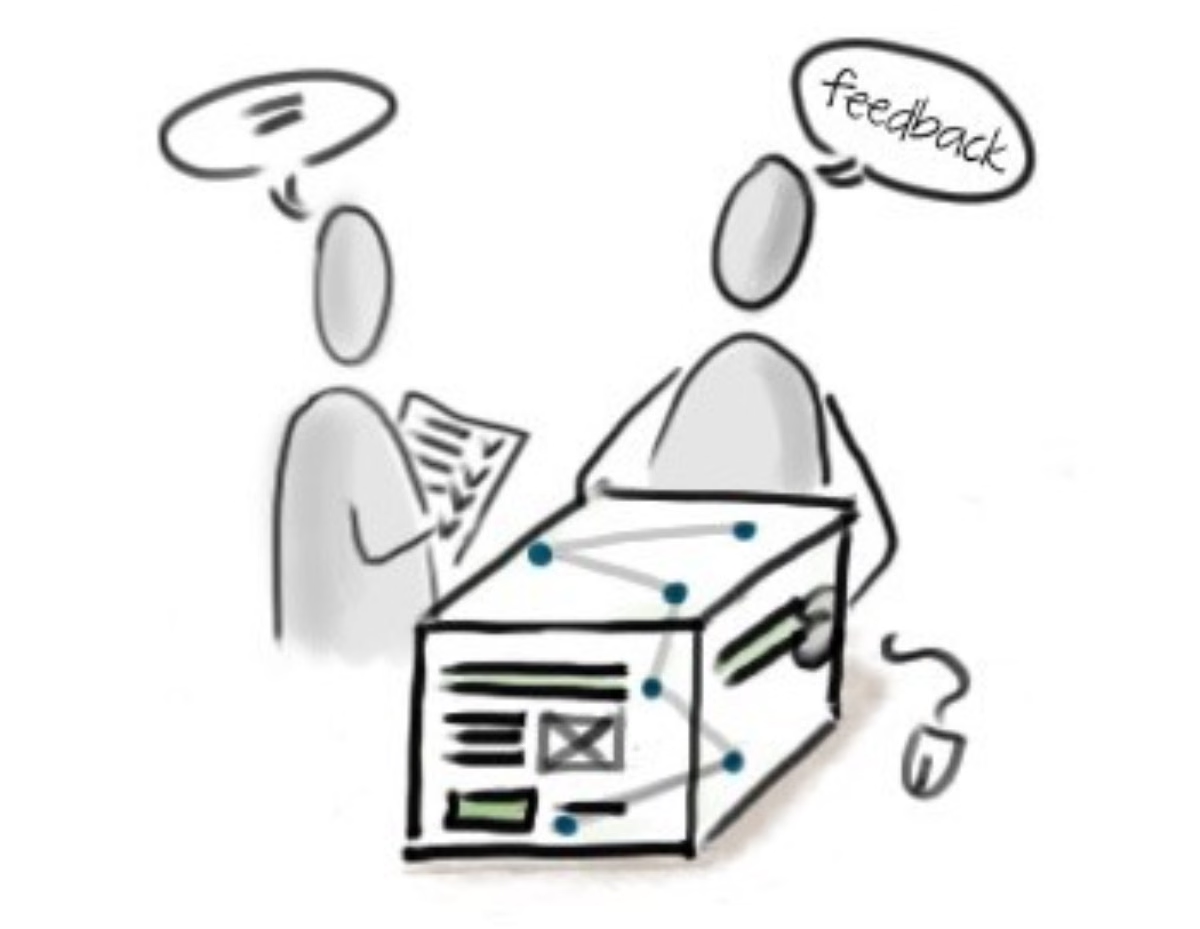
Improving your idea by combining prototyping and user testing
We’re not saying it’s easy to create a truly effective — though not necessarily perfect — prototype. But it will help you create amazing products and services that your customers simply can’t do without. By incorporating user testing into your development stages and using your prototypes in user studies, you can ensure you’re on the right track. You can refine, test, refine, test and repeat until the desired result is achieved.
Authors
-

-
