
UX research is constantly evolving. New methods and new ideas are emerging all the time. One exciting development – one we’re very much involved in – is Continuous Discovery.
Continuous Discovery is a form of exploratory research. But it isn’t so much a method as it is a way of thinking – a mindset. It means that rather than conducting a major study every now and then, you’re constantly discovering and learning. You map out users’ needs and behaviour on a weekly basis. You test assumptions about new features, services or products using all sorts of different research methods. By continuously exploring, you stay on top of the changing needs of your customers and the market. This ensures you can always adapt and come up with the right solutions. Solutions that deliver value to your target audience and benefit your organisation.
In this article, we’ll explain how Continuous Discovery can help you. What exactly does it mean? What does it look like in practice? And is it better than project-based research, or can the two coexist?
It is more important than ever to stay in constant contact with your target audience
The world is changing rapidly. Everything is in flux. So conducting a survey a few times a year is often no longer enough if you really want to understand your customers. Change is happening in all sorts of places, in all sorts of ways: in the market, in needs and opinions, and in technology. You need to stay in constant contact with your target audience – the people for whom you develop your products or services. If you don’t, there’s a good chance you’ll miss important developments or be too late to respond to what’s happening.
The world is changing rapidly. Everything is in flux. So conducting a survey a few times a year is often no longer enough if you really want to understand your customers.
Continuous Discovery: not a method, but a mindset
Traditionally, research is carried out on a project basis. These are relatively large-scale studies that you set up every so often to gain a clear picture of your target group’s underlying wishes and needs. This project-based approach remains important (more on that later), but alongside it, you should be carrying out a different kind of research: Continuous Discovery.
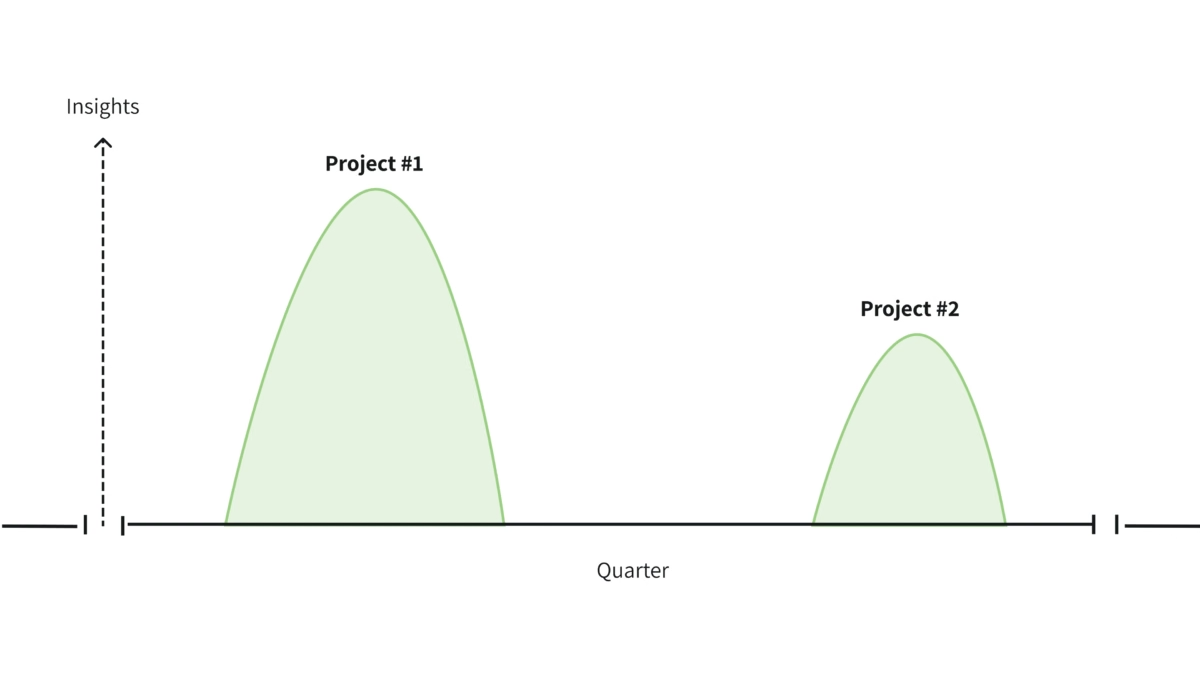
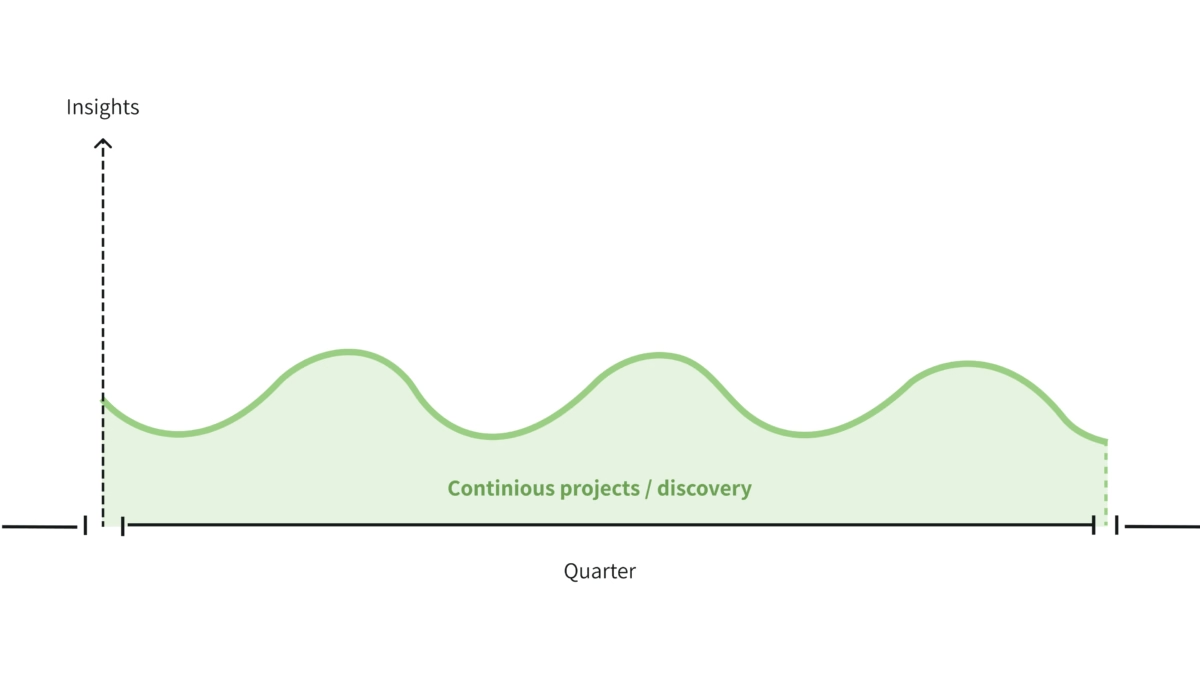
Whereas in traditional context and needs research you carry out separate projects each time, with Continuous Discovery you do the opposite: you conduct small-scale research on an ongoing basis. You check in with your target audience. You test the assumptions held within your team. You discover how your customers’ world is changing and respond to it quickly. You enrich your understanding of your customers on a weekly basis. And that’s important: after all, innovation or new opportunities aren’t discovered by chance. That requires research. And not just once, but all the time.
You don’t stumble upon innovation or new opportunities by chance. It takes research. And not just once, but all the time.
There are all sorts of benefits to Continuous Discovery, for example:
- You become aware of changes in the market more quickly, enabling you to respond to new developments sooner and more effectively.
- You continuously validate opportunities and ideas, even before investing a lot of time and energy in developing them.
- You can test your assumptions with users straight away – you don’t have to wait until the next research session is finally scheduled.
- You link your research to your objectives and KPIs, meaning it delivers immediate value to your business.
Continuous Discovery in practice
Let’s get specific. When you apply Continuous Discovery, you essentially go through four steps.
#1 Quarterly objectives set the focus
A major advantage of Continuous Discovery is that you can easily align your research with your organisation’s annual or quarterly objectives. So that’s the first step: you map out the objectives and, based on those, determine which questions or assumptions you’re going to investigate or validate. Because you’re constantly aware of what’s going on, you help teams make faster and better decisions.
Because you’re always in the loop, you help teams make faster and better decisions.
#2 Continuous research
You carry out research on a weekly basis. This might be to address a question based on assumptions drawn from your quarterly targets, or it might be to address a question that crops up at the last minute. You conduct small-scale, rapid research. You test assumptions about new features, products or services. And you use all sorts of methods to do this. Think of diary studies via WhatsApp, in-context observations, in-depth interviews, unmoderated tests, questionnaires or online experiments – it just depends on what best suits the questions at hand, and what fits within the time available. Rather than taking a comprehensive snapshot, you paint a picture of your customer that becomes increasingly clear and detailed over time.
Rather than a comprehensive snapshot, you paint a picture of your customer that becomes increasingly clear and detailed over time.
#3 Delve deeper and validate
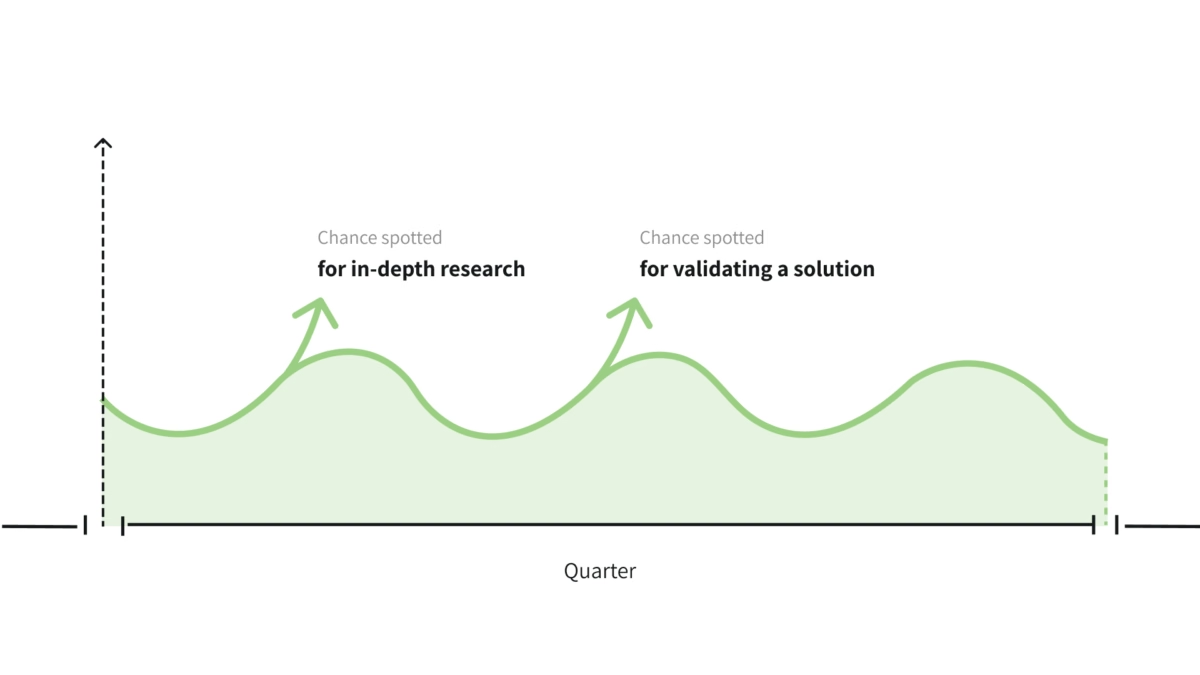
If you carry out research on an ongoing basis, you’ll spot opportunities more often. You’ll notice things that are interesting, things you want to do something with. If you want to learn a bit more, you carry out in-depth research. If you already have a specific solution in mind, you set up an experiment to test your ideas.
#4 Reflecting and summarising
You share your insights with the team on a weekly basis. At the end of each quarter, you take the time to summarise the key insights. This allows you to share them more widely across the organisation and use them straight away as input for the strategic objectives for the following quarter – this is how you make user insights a genuine part of your organisational culture.
Is Continuous Discovery, by definition, better than a project-based approach?
Certainly not. Both have their place.
Sometimes a project-based approach makes sense
A project-based context and needs analysis is somewhat more extensive. You delve deeper in a short space of time. You learn a great deal about your customers. This approach is useful if, for example, you haven’t carried out any exploratory customer research for years. It allows you to lay a solid foundation, which you can then refine further through continuous customer research.
Another example: if you want to introduce a completely new business model, you’ll probably want to quickly gain a clear understanding of where the biggest opportunities and risks lie. A somewhat more extensive study to uncover the context and needs of your target audience is then appropriate.
Continuous Discovery is the constant undercurrent
With Continuous Discovery, you make a more direct impact. It’s pragmatic. It helps you stay responsive to the market.
That makes it relevant for any organisation – even if you’re less exposed to rapid change. By conducting weekly research, you get immediate answers to pressing questions. You test assumptions through all sorts of different research methods. That helps you make adjustments. You ensure that your whole team starts thinking more from the customer’s perspective, that their mindset changes, and that they don’t blindly rely on assumptions hidden within business objectives. Because your team knows: if we put something on the agenda, it will be included in the research this very week. Continuous Discovery is fast and accessible. That mindset of checking in briefly, gathering information, and then using your insights to steer your organisation in the right direction – that’s the biggest benefit of Continuous Discovery.
That mindset of checking in from time to time, gathering information, and then using your insights to steer your organisation in the right direction – that is the biggest benefit of Continuous Discovery.
We hope that, after reading this article, you’ll be able to get started with Continuous Discovery yourself. Need a bit of a nudge? Feel free to give us a call or send us an email, and we’ll pop round to help you work through it.
Authors
-

-

-

-
