
IBS Capital Allies is an asset manager. But not a stuffy, aloof asset manager – IBS has a human face. Their approach is personal and human. They guide clients through the increasingly complex world of finance. Just like a true ally.
The challenge
IBS was mainly organised offline. And that worked very well. The personal contact between client and adviser – a human touch. That is their strength. But the world is becoming increasingly digital. This is changing clients’ expectations. They also want to be able to access services online and receive assistance online. So IBS asked itself: how can we be the go-to financial partner for our customers online – just as we are offline? How can we digitise while keeping it human?
The solution
IBS didn’t want to simply design and build something. The risk that this human touch would be lost online was too great. That’s why we began by formulating a Product Vision. We spoke to customers and immersed ourselves in IBS’s business. How could we bring that human touch online? Which features would reflect that? We immediately translated the Product Vision into a series of screens: a Concept Car – the foundation on which to build IBS’s online future.
Are you planning a major change? Start by creating a concept car
IBS wanted to take steps forward, to do something truly different. In such cases, it’s important to sketch out a vision of the future – a ‘Concept Car’.
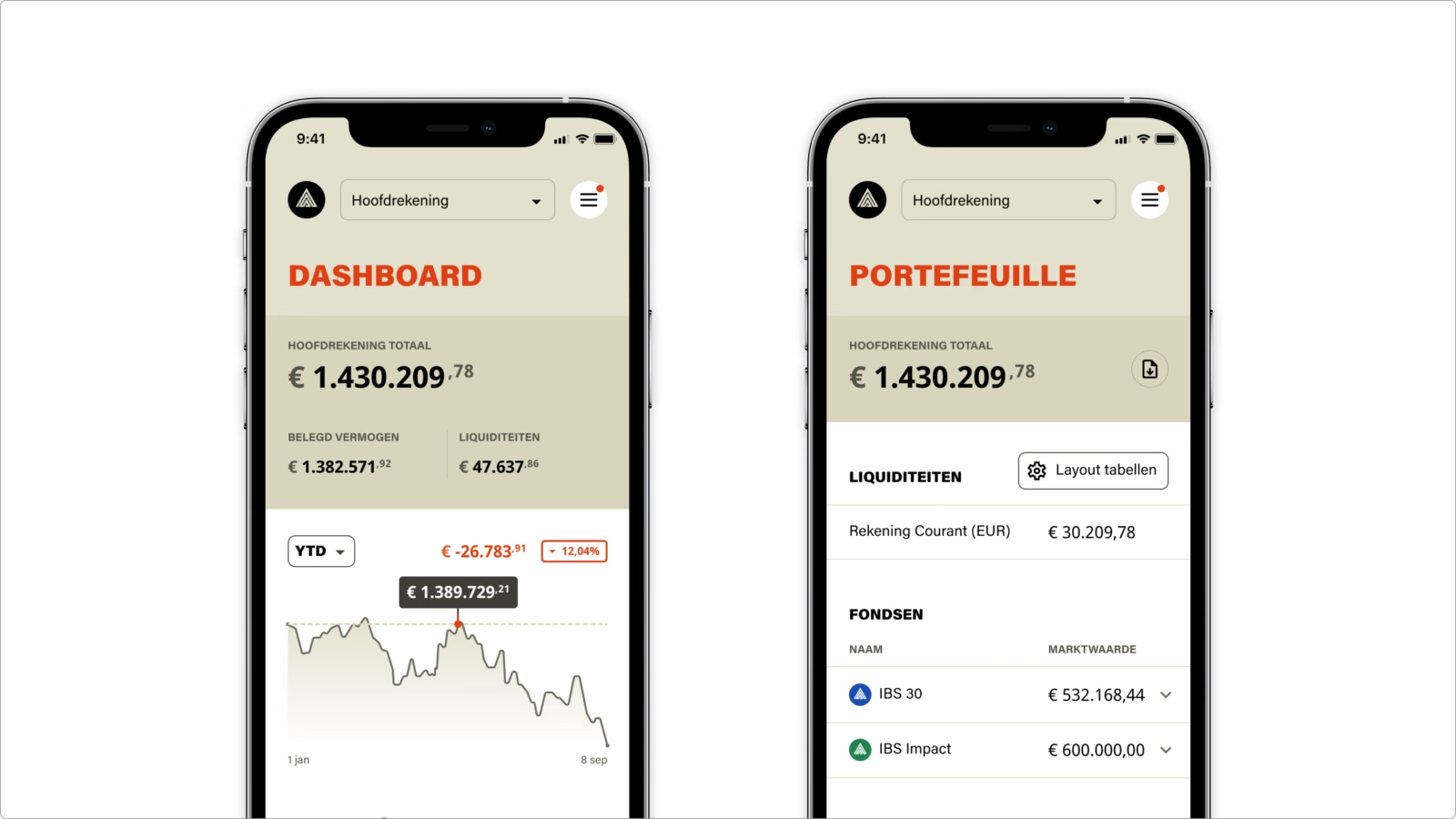
A Concept Car is visionary yet, at the same time, very concrete and tangible. Think of it as a demo app you can click through. It captures the key ideas and features in a series of mock-ups and screens. It’s a brilliant way to get the organisation on board, to show stakeholders where IBS wants to grow online over the next 1 – 2 years. But it’s also a way to test ideas with customers. Does the concept resonate? Where could it be improved? A Concept Car already looks very real, but in fact it’s still a rough lump of clay. It’s easy to mould and adapt.
A ‘Concept Car’ sounds simple, and it is, but it doesn’t just appear out of thin air. It stems from a clear Product Vision.
You can’t build a house without foundations. You can’t build a concept car without a product vision.
The foundation of your Concept Car: a Product Vision
You don’t build a house without foundations. You don’t build a Concept Car without a Product Vision. The Product Vision sets out what IBS wants to achieve, and exactly why. The Concept Car translates that into a visual representation. It shows how.
A Product Vision isn’t a thick tome. It’s a short, inspiring document. It sets out in concrete terms what you’re working towards. It provides a guiding principle. You can use it to assess your choices and check whether you’re still heading in the right direction.
The Product Vision sets out what IBS aims to achieve, and exactly why. The Concept Car brings that vision to life. It shows how.
How do you arrive at a Product Vision like this?
Insight is the key: insight into IBS and its objectives, and insight into customers and their needs. You can only establish a sound vision if you have a thorough understanding of the context. So you don’t come up with a Product Vision on your own in your attic room. As a Product Owner, you do this together with your key stakeholders and senior management. And it doesn’t have to take long. If you approach it efficiently, you’ll have your Product Vision in place within a week or two.
We went through four steps with IBS:
1. Getting to know IBS. We wanted to get to know IBS inside out. So we held a ‘deep dive’ session with the team. Who exactly is IBS? What are your (online) goals? What do you already know about customers? Who are the main competitors, and how are they performing? As well as gathering insights, a deep dive is a good opportunity to get everyone on the same page. It fosters a sense of connection. It injects the right energy into the project.
2. Getting to know the customers. Customer needs form the basis of every Product Vision. To better understand IBS’s customers, we conducted six in-depth interviews. We learnt about their needs, motivations and pain points relating to their financial situation, their relationship with IBS and the online environment. To ensure that the insights from the in-depth interviews were also applicable to a wider group, we conducted an online survey amongst around 40 customers.
“I do miss having a graph showing your net worth compared to a week ago. It’s just wealth management, so it doesn’t really help you in any practical way, but it does make you feel better. It gives you peace of mind.”
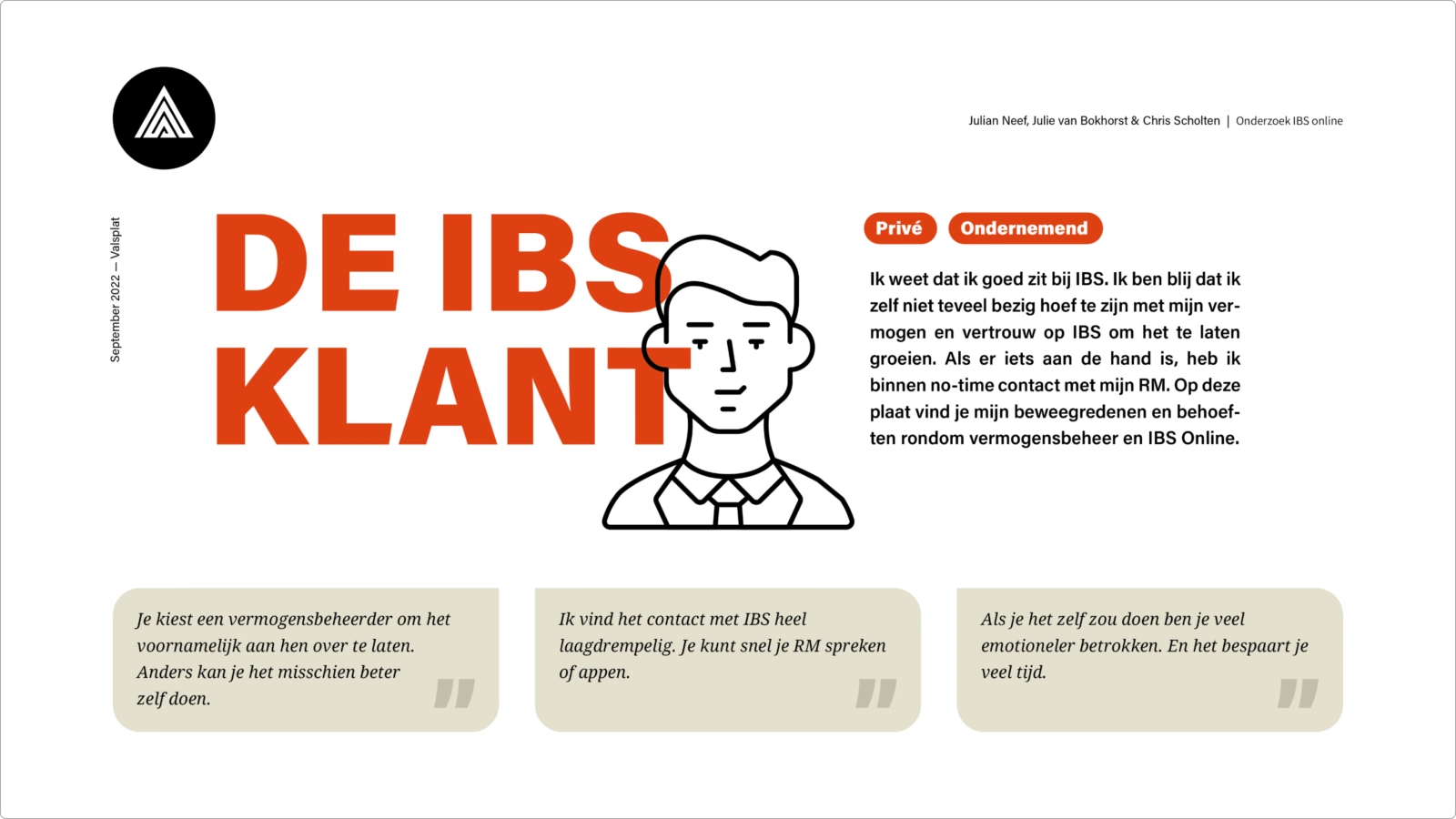
We compiled all the insights from the customer research into a ‘customer profile’. A customer profile is a description, or a stereotype, of the IBS customer. It clearly sets out all their motivations, needs and frustrations in one go.
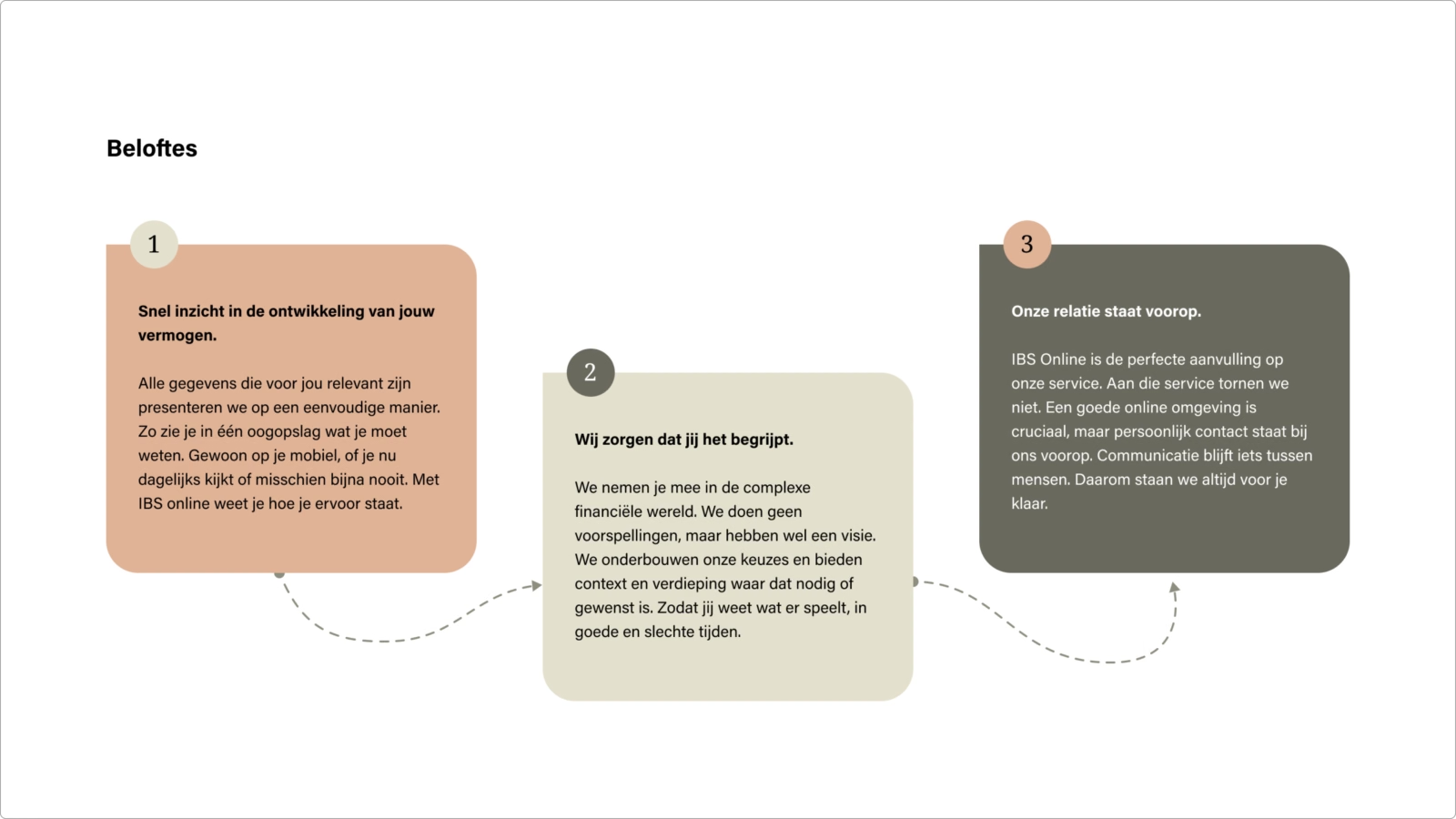
3. The Product Vision workshop. The insights are there, and the customer map sums it all up nicely: time to move from the customer map to a Product Vision. We did this in a workshop. We shared the research findings with the IBS team. We guided them through the world of their customers. Meanwhile, they jotted down the opportunities they saw for the new IBS Online on Post-it notes. We clustered and prioritised those Post-it notes. What is most important? What do we really need to address? We translated this into a number of clear customer promises for IBS Online.
We also used the workshop for other exercises. For example, we asked the team to write a ‘future press release’ for the new IBS Online. What will IBS Online offer customers? What problems will it solve? Writing a future press release always sparks valuable discussions: what really is the most important thing? What are we aiming for? Which words do we choose and which do we avoid?
4. Let’s get writing. The context was clear. Building on that, our strategists drafted the Product Vision. The Product Vision sets out who IBS Online aims to be for customers. What promises it makes. What needs it fulfils. How it fits into the market and how it will help IBS to develop further.
Because there was a clear vision in place, our designers quickly came up with a Concept Car – one that perfectly aligns with customers, the company and the environment.
You’ve got your Product Vision, your Concept Car – what next?
We built on the Concept Car. We worked out the screens in detail. Together with IBS, we created an MVP (Minimum Viable Product). And we mapped out the roadmap. What needs to be done first? What can wait? With the Product Vision and Concept Car in hand, we made the design process for IBS much more thorough and straightforward. It ensured we knew exactly what made customers happy – and what didn’t. It made it clear how IBS can do online what they’re so good at offline: guiding customers through the complex world of finance. Like a true ally.
Any questions about Product Visions and Concept Cars?
Nils van den Broek — Founder

Authors
-

-

-
