
ARTIS has two museums and a park teeming with nature. In the park, there’s plenty to discover: animals, plants, trees and even historic buildings.
In a place like ARTIS, it’s important that people can find their way around easily. The routes need to be clear, so that visitors can make the most of their day. ARTIS knew that the wayfinding (or signage) in the park could be improved. The question was: how exactly? All sorts of ideas were on the table, but there’s only one way to find out what works: go into the park, talk to visitors and observe their behaviour. So we set out to investigate with ARTIS. From there, we worked together to set the direction for the new wayfinding system.
In this case study, we’ll show you how we worked and the value of conducting research in context: by seeking out customers or visitors in their natural environment, you arrive at solutions that align with real behaviour and real needs.
The challenge
ARTIS had several ideas for a new, improved wayfinding system in the park. These ideas were based on in-house knowledge and input from wayfinding expert Mijksenaar. A solid foundation, then, but something important was still missing: insights from visitors. Before overhauling the wayfinding system, ARTIS needed clarity: how do people currently navigate the park? What do they want to see? Do they have a specific destination in mind, or do they prefer to let themselves be carried along by the winding path?
The solution
For products and services where the environment plays a key role – such as at ARTIS – it makes sense to carry out research within that environment. This gives you an insight into environmental factors, subconscious behaviour and latent needs – all things you’re unlikely to discover in the lab. So we went into the park. We observed visitors. We spoke to them. We discovered how they moved around, what went well, and where they got stuck. Based on these insights, we formulated design principles – a set of guiding principles that enabled ARTIS and Mijksenaar to focus their search for solutions that perfectly match visitors’ needs.
Services
“We’ve been working with Valsplat for a long time on the digital side of ARTIS. During a pleasant chat, I discovered that Valsplat goes beyond the screen. They can also join us in the park to improve the offline experience for visitors.”
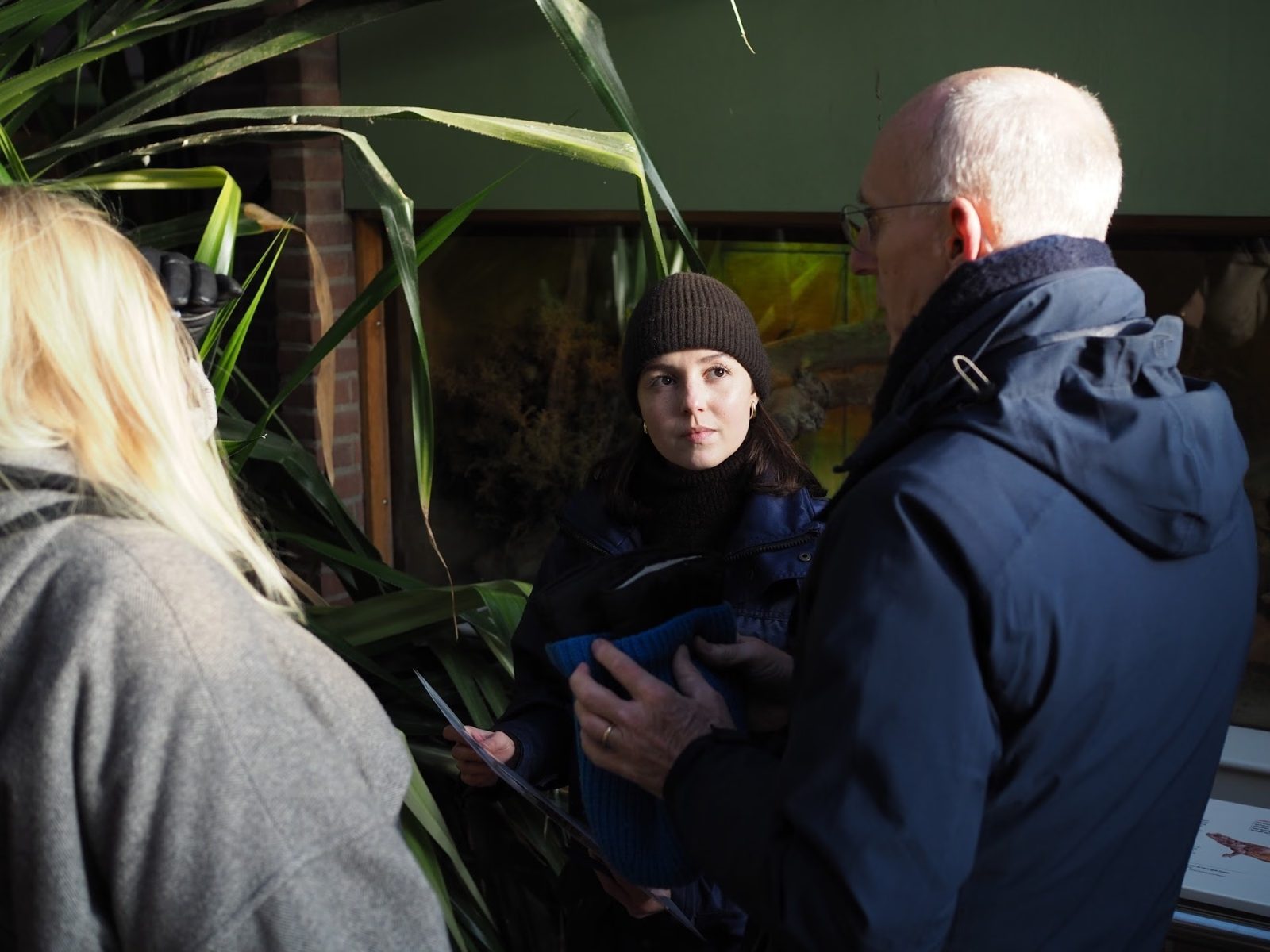
Exploring the surroundings reveals what would otherwise remain hidden
When you visit ARTIS, you’ll come across all sorts of things: flora and fauna, other visitors, bright sunshine or rain, but also various buildings such as ‘Het Kleine Zoogdierenhuis’, toilets or catering facilities. There’s a lot to see, and a lot going on. This makes wayfinding tricky; its success depends on a whole host of factors. At the same time, it’s a hugely important part of the experience people have. After all, if you’re constantly having to search for your way, or keep ending up in the wrong place, then a fun day out at ARTIS can suddenly become quite frustrating.
“Important issues always come to light that you wouldn’t have anticipated beforehand. For example, visitors telling us that they didn’t notice some of the signs because bamboo was growing in front of them. That’s why it’s so important to carry out this research within the environment or context itself.”
We wanted to understand the entire visitor journey, from arrival to departure. We did this in two ways: by observing and by asking questions. We observed how visitors moved around. We interviewed them at various points during their day at the zoo. We spoke not only to visitors, but also to animal keepers and volunteers – they help people find their way around every day, so they have a good insight into the challenges within the park. Because we were on site, they were able to point out straight away where things often go wrong and why. That’s a major advantage of ‘in-context research’ over lab-based research: feedback easily becomes concrete, and issues come to light that would otherwise remain hidden.
It takes very little to test your concept
ARTIS and Mijksenaar had already developed two concept directions. We took these into the park to gather feedback – because you can’t start that process early enough. You don’t need much to get valuable input on your concept. No fully developed site, no perfect signage, no ‘finished product’. We showed out printed concepts for the wayfinding and asked what people thought of them.
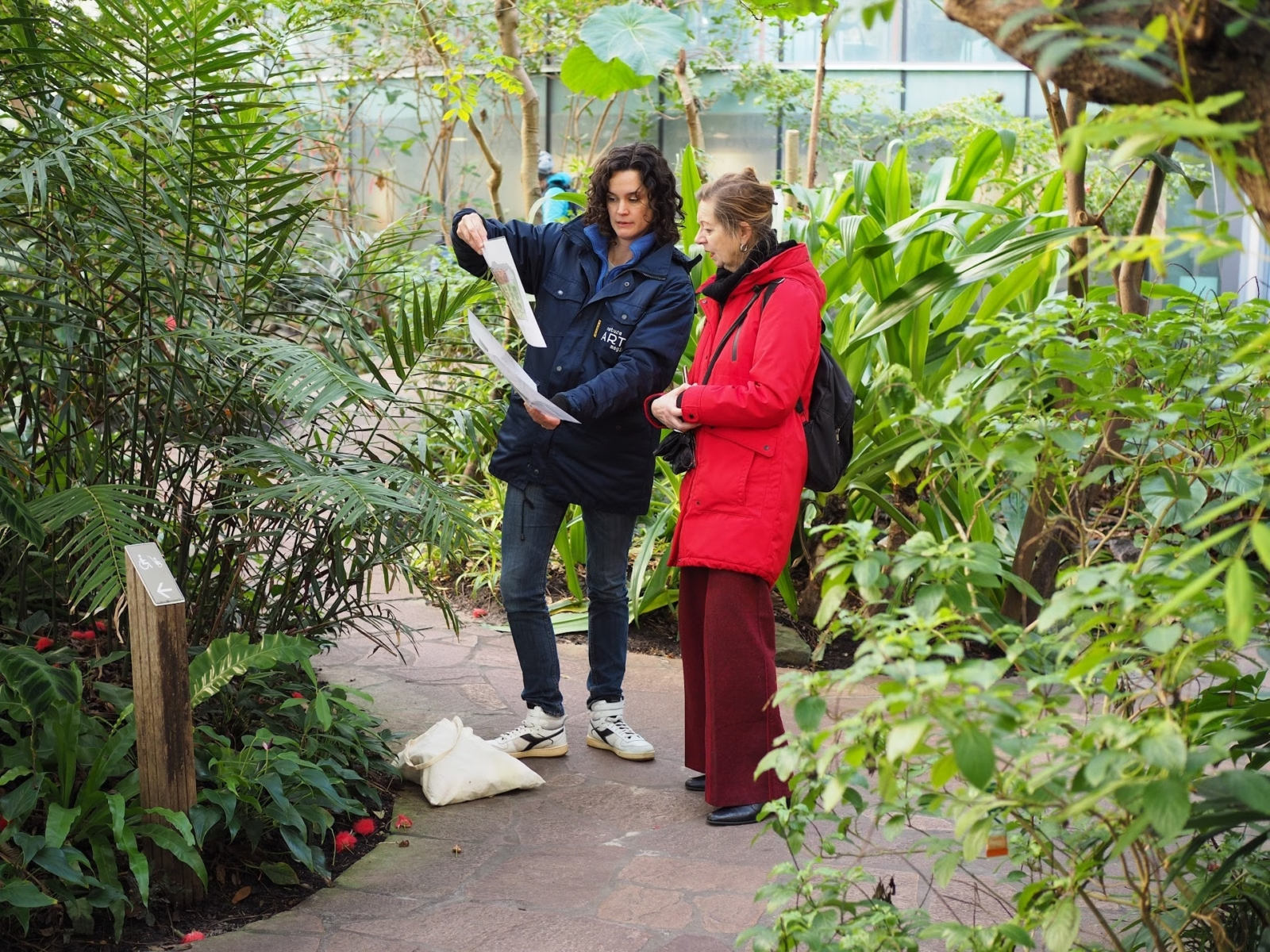
A quick concept test like this isn’t a definitive validation, but it does make it clear whether the idea resonates and whether people understand it. You learn which elements of the concepts work, and which don’t. The results of this rapid research helped ARTIS and Mijksenaar to make decisions and hold internal discussions. That is the power of insight: once the visitor has had their say, you can move forward.
“To start with, I want to walk around and wander through the zoo. But if, for example, I’ve only got 45 minutes left, then I want to search in a more targeted way. This layout would be a great help with that – I’d know straight away where to go. I find that more difficult with the other layout.”
Formulate design principles – that way, you can be sure you’re heading in the right direction
Insights are only useful if you act on them. If you apply them correctly, rather than shoving them to the back of a drawer. So, once we’ve carried out our research, we prefer to follow up straight away with an ideation session – a session in which we look ahead. We’ve got the insights – now what?
The three of us ran the session: the ARTIS team as experts on the park and its internal objectives, Mijksenaar as a wayfinding expert, and us as representatives of the park visitors. By bringing all this expertise together in one room, we moved from user insights to concrete design principles in the space of an afternoon – this is a set of guiding principles, a set of rules for everything that’s going to be designed. It helps you generate ideas. And it ensures that whatever you create always aligns with visitors’ needs.
“The ideation session was great fun. Charlotte did a brilliant job with it. Naturally, we were really looking forward to the conclusions. But it didn’t stop at simply presenting them. We got straight down to work. Whilst she was sharing the insights, we were already asking ‘How can we…?’ That immediately gives you a starting point for thinking about the design.”
The insights and design principles helped ARTIS and Mijksenaar to make key decisions. They were able to set a direction and move forward with the design process – with confidence, and with the certainty that they were tackling the right issues for visitors.
Would you also like to involve your customers or visitors in the design process, but aren’t quite sure how? We’d be happy to help you think things through.
Authors
-

-
