
When two companies join forces, great, innovative ideas can emerge. PostNL and bol also saw an opportunity to explore something valuable together: reusable packaging. The idea kept coming up during their joint strategy sessions. The teams were enthusiastic. And the concept looked promising for both organisations’ sustainability objectives. It was time to put the idea to the test. We were asked to help them do so as effectively and intelligently as possible.
The challenge
Reusable packaging – the idea put forward by PostNL and bol was clear. There was certainly curiosity within the organisations. But, of course, it also places certain demands on the customer. Are people actually interested in it? Will they actually send the reusable packaging back? Or will they just throw it away after all? Before PostNL and bol could launch the idea on the market, they wanted answers to these questions. They wanted to carry out research to gain a clear understanding of actual behaviour. All to avoid launching something that sounds good but doesn’t work in practice.
The solution
If you really want to test behaviour, then you’re in the realm of Experiment Design. With Experiment Design, we launch an idea onto the market as an experiment. That way, we learn how people react to it and how they use it. Together with PostNL and bol, we drew up a set of assumptions that we wanted to validate. We then took the idea out into the real world. We devised various returns instructions and options. We tested it online. We collected parcels from doorsteps, in neighbourhoods and in shops. We made the experiment as realistic as possible, so that by the end we could draw a conclusion: does this work, or does it not?
Services
“Through experimental design, we launch an idea onto the market as an experiment. That way, we learn how people react to it and how they use it.”
Should we go ahead with it, or not?
That’s what the innovation teams at PostNL and bol wanted to find out. The idea was in line with both companies’ climate ambitions. It had internal support. But what do customers think? To investigate how people respond to a new idea, we set up experiments. As well as being an efficient way to conduct research, Experiment Design is also a first step towards implementing the idea. That’s because Experiment Design actually achieves something: you engage directly with your customers and learn more about them – which also benefits communication and marketing.
“We needed to explore consumers’ actual behaviour. That’s how we ended up working with Experiment Design and Valsplat: by working together, we were able to make rapid progress, achieve results and get clear answers.”
Experiment design is accessible, but also very real
Experiment Design begins with formulating research questions and assumptions. PostNL and bol wanted to explore a number of topics: 1) interest in reusable packaging, 2) the willingness to actually return reusable packaging, and 3) which return options are preferred.
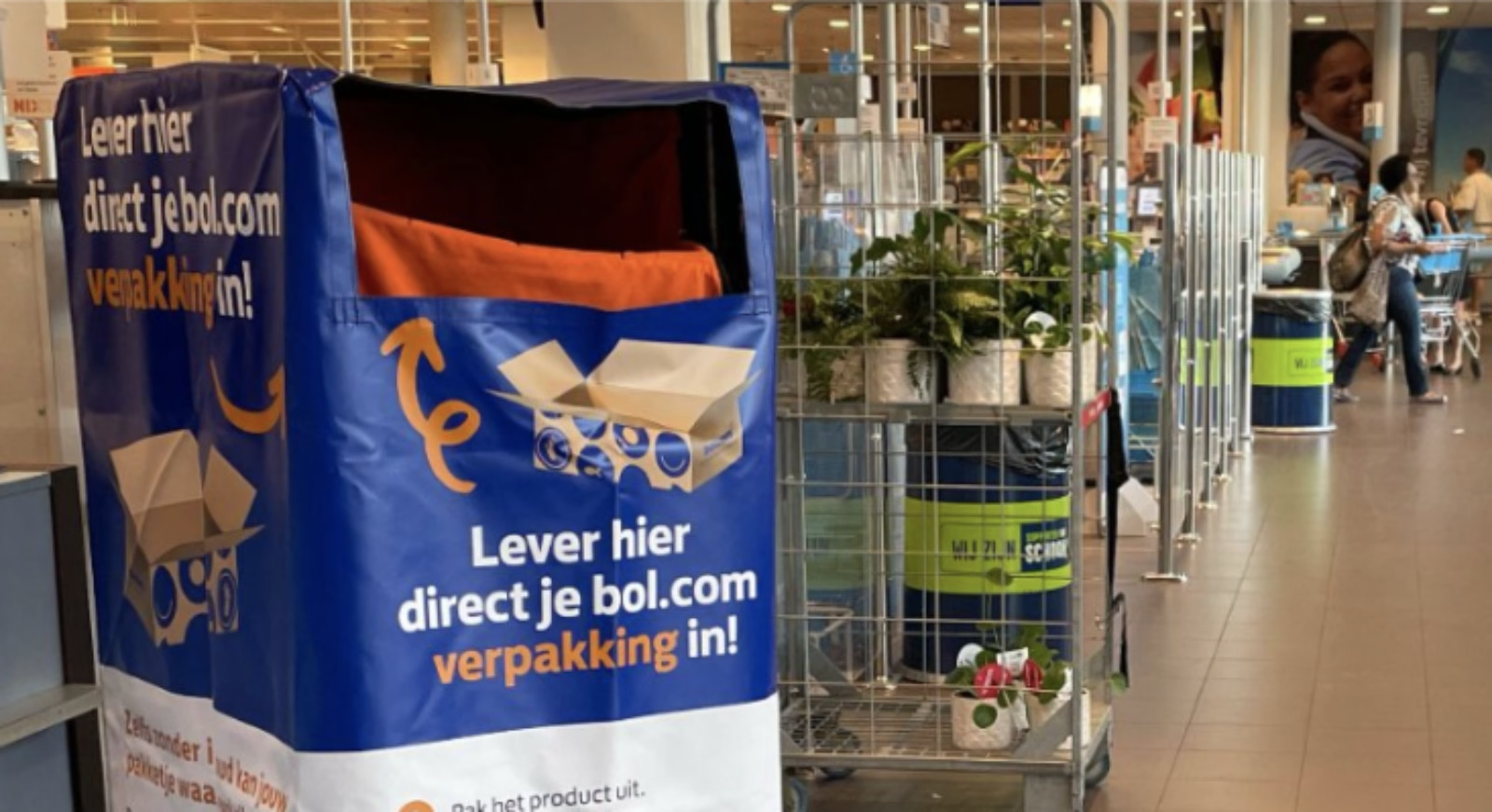
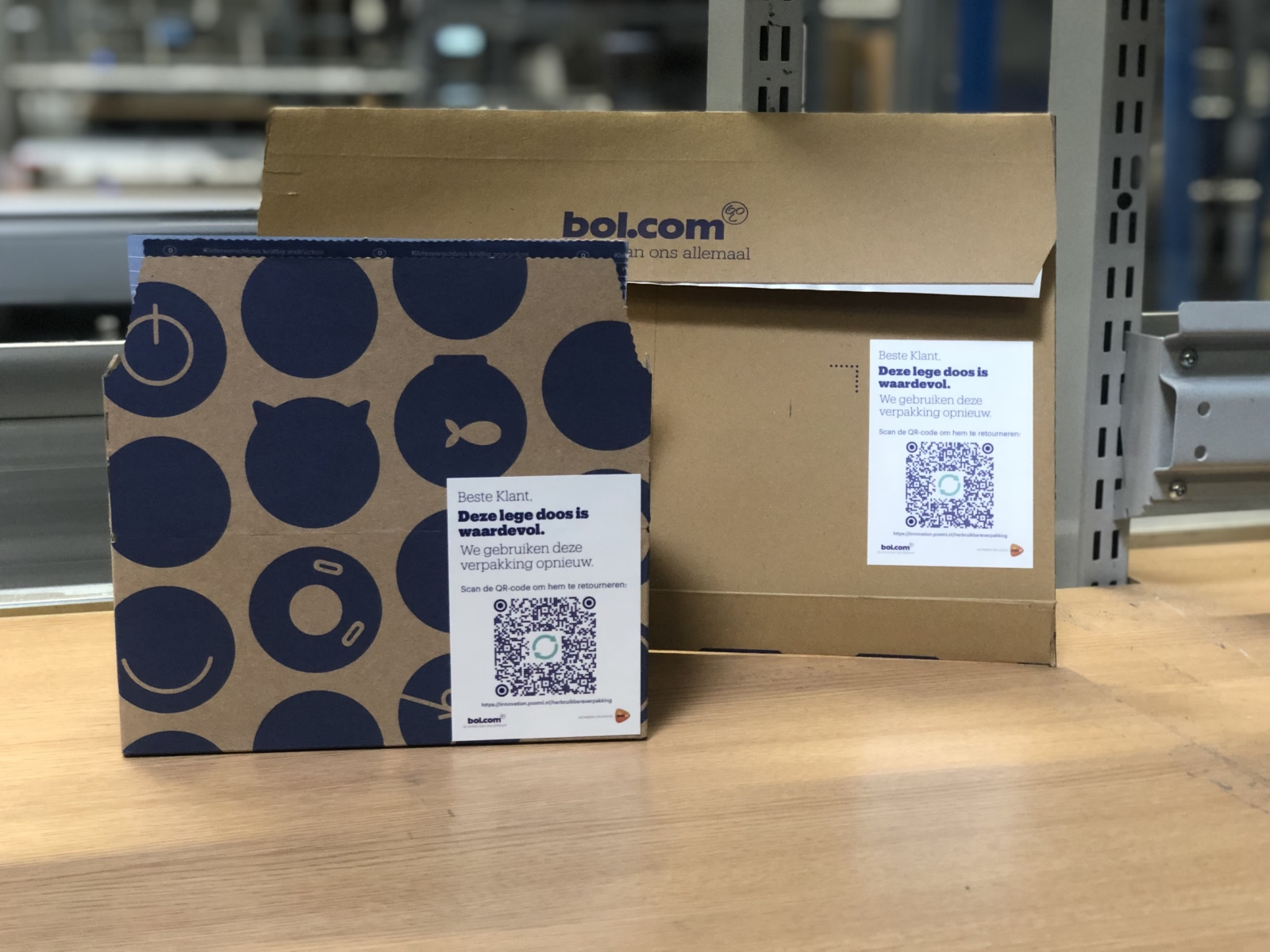
One of the key principles of Experiment Design is to start small: you don’t want to invest time and money (just yet) in expensive online solutions or the development of a new product – such as, in this case, the final design of the reusable packaging. That’s why we started the experiments online, using bol’s current packaging. What if we gave people the option to return it right now? Based on a number of questions, we offered various return options: in the neighbourhood, for example, or at a local supermarket.
This immediately yielded great results: people actually went to the supermarket with their packaging. Experiment design is accessible and quick, but also incredibly authentic.
“One of the key principles of Experiment Design is to start small: you don’t want to invest time and money (just yet) in expensive online solutions or the development of a new product.”
Put on a PostNL shirt, and off we went to ring doorbells
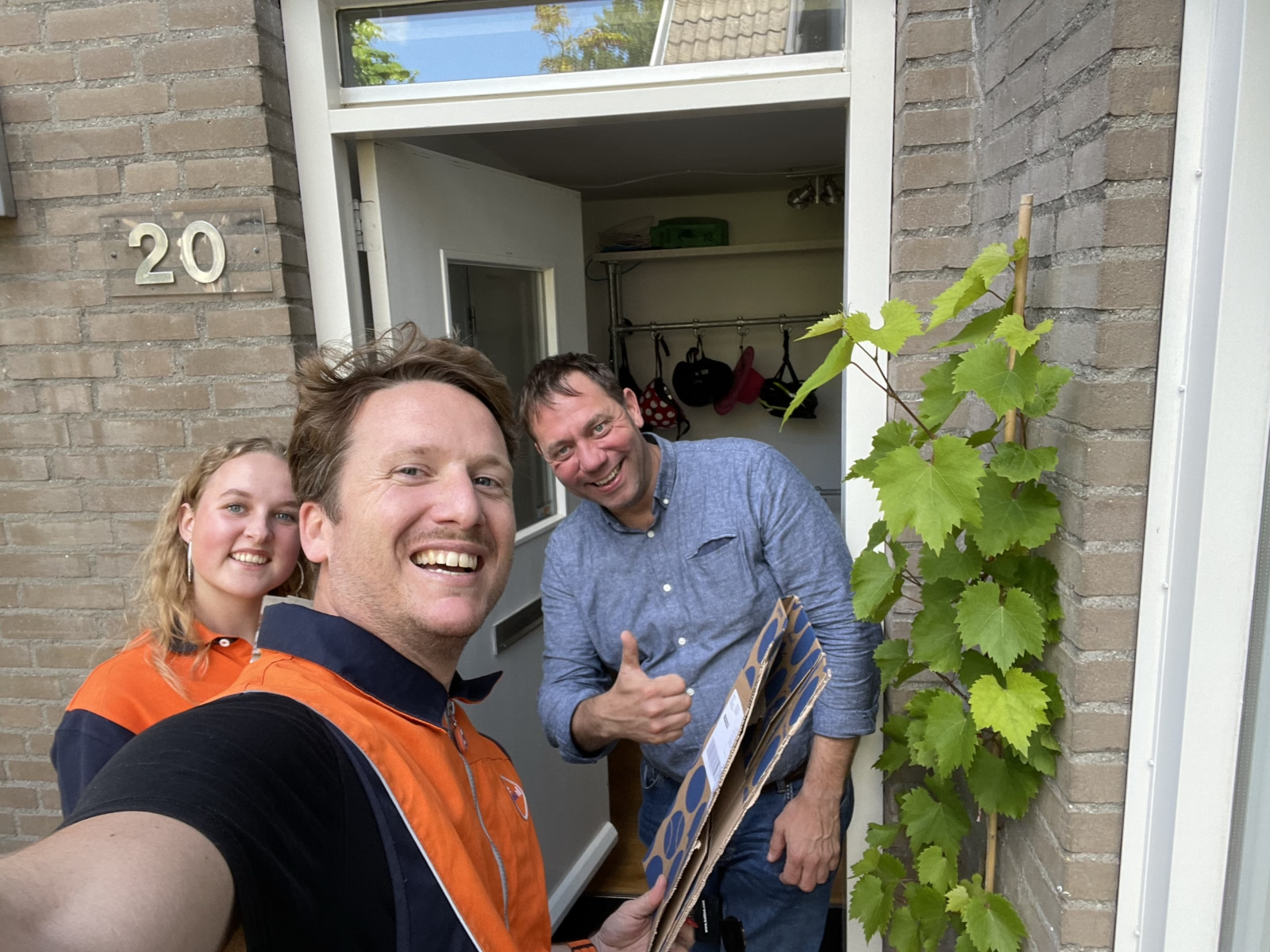
Nothing gives you a better insight than a face-to-face conversation. So we put on our PostNL shirts and cycled through the neighbourhoods of Utrecht, The Hague and Amsterdam on our cargo bikes. We rang the doorbell to ask if we could collect packaging for reuse. We gave people a leaflet setting out various return options and instructions. Purely to gauge initial reactions: is there any interest? What are people’s needs? The reactions were positive. Not only was there interest in reusable packaging, but it also turned out that the majority didn’t mind making a little extra effort to return it. We gained an insight into how people prefer to return their packaging. And once again, following the return trials, a lot of packaging was returned to bol – people put their money where their mouth was.
Experimenting has taught us a great deal
It is now clear and well established that customers are interested in reusable packaging. However, we haven’t yet found the ideal way to incorporate reusable packaging into our packaging options. We are therefore keeping a close eye on developments and, thanks to our experiments, we have a clear understanding of what we need.
Milou (Product Designer at bol) is pleased with what the collaboration has already achieved: ‘We’re quite large organisations, with many departments, processes and stakeholders. For us, this was the first time we’d worked with Experiment Design. We carry out a lot of experiments at bol, but a large proportion of them are purely digital. The physical component makes this process new and interesting. That was also our challenge: we had to get many departments and stakeholders on board. Valsplat was a great help in this regard. They’ve shown that it doesn’t always have to take a lot of effort to learn important things. I’d recommend any organisation to experiment in this way.’

Are you thinking about testing a new idea on the market?
Nils van den Broek — Founder
Send message via LinkedIn Schedule a meeting nils@valsplat.nlAuthors
-

-
