
You’ll never tire of exploring the Kunstmuseum Den Haag. It houses 160,000 modern and contemporary works. From Monet and Picasso to Kandinsky – thousands of visitors come every year to be inspired and to learn. Among them are school pupils.
The Kunstmuseum wanted to make the experience even more enjoyable for this group. They want to encourage young people to look at the paint on the canvas and the story behind it with as much enjoyment and interest as possible. And digital tools can be a great help with this during the guided tour. The only question was: how exactly?
The challenge
The Art Museum didn’t want to just create something for the sake of it, or simply add a digital element. They wanted to be absolutely certain that it would genuinely enrich the experience for schoolchildren. They were faced with all sorts of questions. What do young museum visitors need? What solution can we offer to meet those needs? How can we ensure our ideas are well aligned with the pupils, the teacher, the teaching materials, the collection and the physical space of the museum itself?
The solution
Our researchers immersed themselves in the museum. We carried out observations and conducted interviews. We spoke to pupils and teachers. We gathered insights. Building on these, we devised and designed solutions, together with the team at the Art Museum. We then tested these solutions with pupils and teachers. In this way, we learnt, step by step, which digital tools can enhance an educational tour.
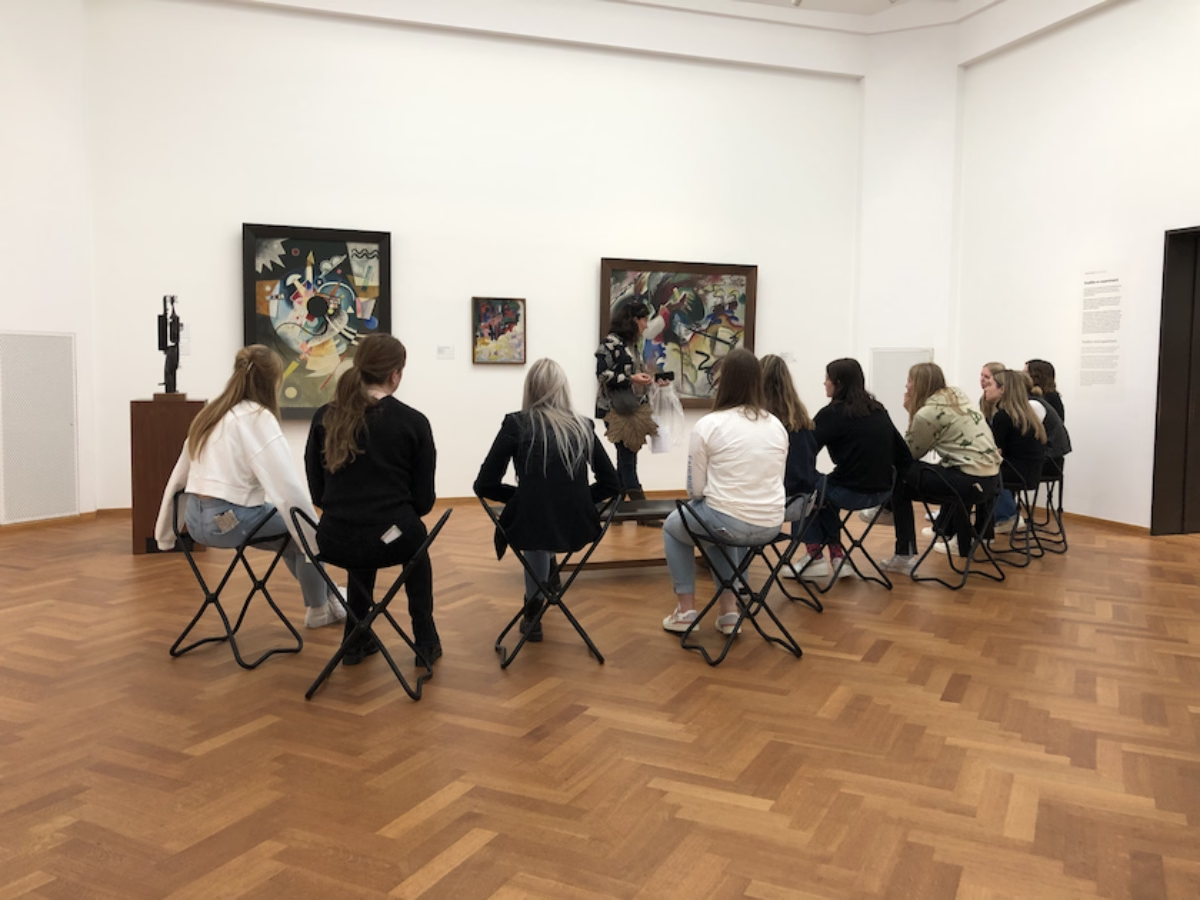
Combine observations and interviews – that’s how you’ll learn the most
If you’re working on a service or product where the environment plays a key role – such as a museum – it’s important to conduct your research within that environment. It gives you insight into unconscious behaviour and environmental factors. You’ll notice things that don’t readily come to light in the lab.
So we went into the museum. We observed guided tours. Afterwards, we spoke to groups of school pupils and (museum) teachers to ask follow-up questions and explore what we’d seen in more depth. The combination of observation and interviews, the combination of actual behaviour and what pupils say – that’s where you get the most out of it.
‘When I heard that the Art Museum wanted to design a digital experience to enrich pupils’ visit, lots of questions immediately sprang to mind: How do the pupils enter the museum? Do they stray from the tour or not? How do they view a work of art? What catches their attention and what doesn’t? What is their attention span? Do pupils work individually or in groups? Do they take notes, and if so, how? What is the interaction and dynamic between pupils and their teacher? What questions do they ask? Do they dare to answer them? How do they cope with the physical environment, such as signs, barriers or the acoustics? What effect do other museum visitors have? You need to understand all of this to ensure that your design doesn’t clash with the pupils’ museum experience, but instead enriches it.’
– Charlotte van Bijnen, Senior Design Researcher @Valsplat
What do you look out for during an observation?
During each guided tour, we noted the highlights – moments when the pupils’ attention was captured. The pupils were most enthusiastic when they discovered connections. Connections between painters, artworks and art movements. Or links they spotted with their own experiences. This really brought the artworks to life and made the experience much more educational.
As for the digital aspect: pupils said they actually enjoyed getting away from their screens for a change. But they did really appreciate it when the teacher looked up an example on her phone. For example, to illustrate her explanation of the *Victory Boogie Woogie* – that’s when digital resources really add value.
‘Seen from above, the Victory Boogie Woogie resembles the streets and taxis of New York.’
‘What are the streets in New York like? I’ve never been there… I’ve no idea how to compare them.’
From design principles to solutions
You’ve got a whole stack of insights – so what next? Based on these insights, we formulated eleven design principles – these are conditions, or rules, that the new design must meet. To bring the design principles to life, to show how they can be translated into design, we created an example for each principle.
For two of the design principles, for example, this looked as follows:
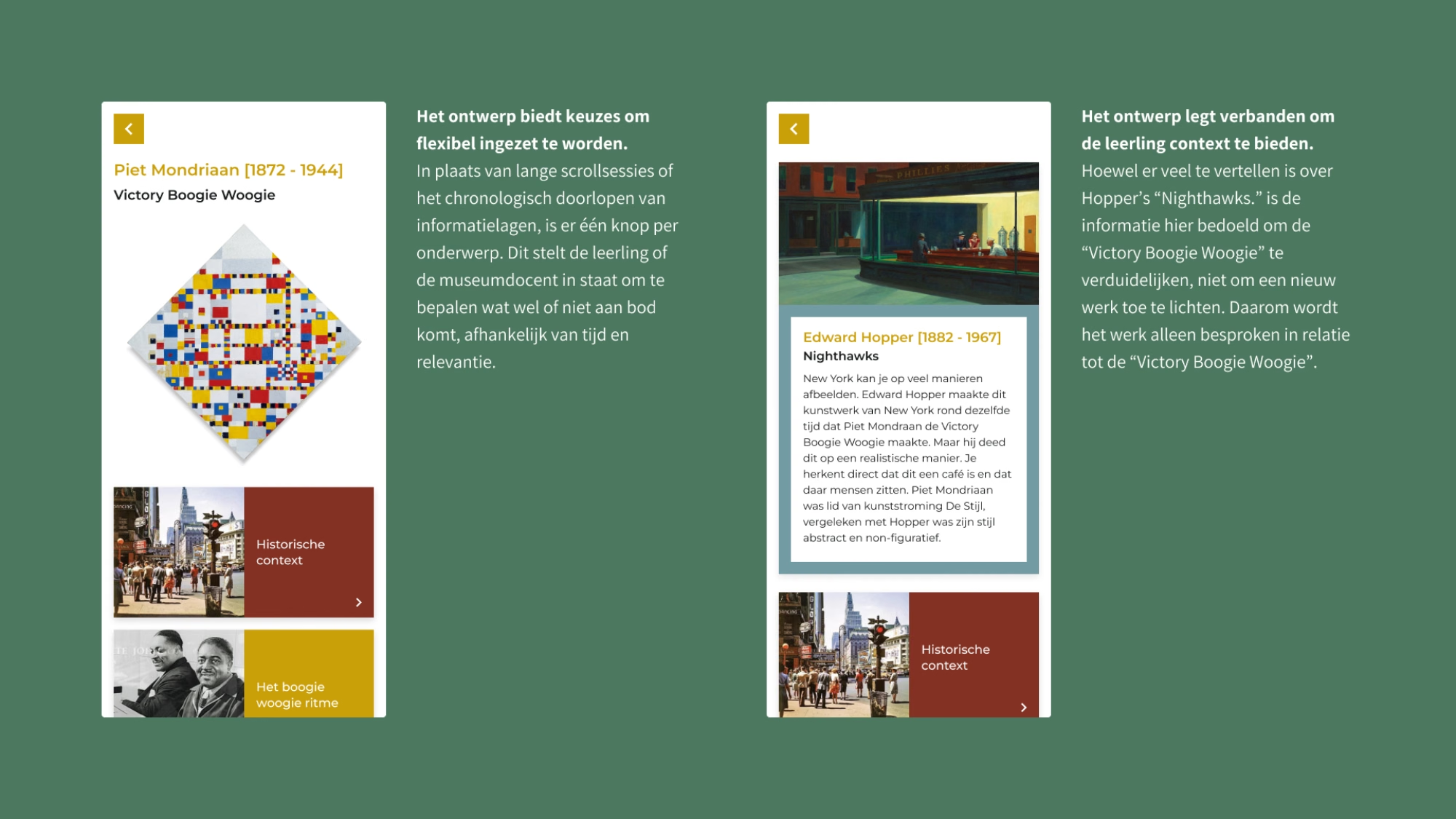
The two design principles: The design offers options for flexible use: instead of … The design establishes connections to provide context for the pupil: …
The insights and design principles clarified the parameters – the boundaries within which we had to work. So we held a session together with the Art Museum and came up with an endless array of solutions. Thanks to the combination of expertise – the Art Museum contributed educational and museum-related knowledge, whilst we brought our expertise in customer-centred design – we quickly arrived at valuable solutions. These ranged from solutions that could be implemented immediately to more strategic, forward-looking ideas. We whittled the long list down to a set of prioritised concepts.
Our designer was there to visualise them straight away. By sketching live, we made our discussions immediately tangible. This meant it very quickly became clear which direction we wanted to take. Among other things, the concept had to inspire school pupils to learn more about the art in the museum; it had to stimulate discussion and be usable independently – and there were numerous other guiding principles as well.
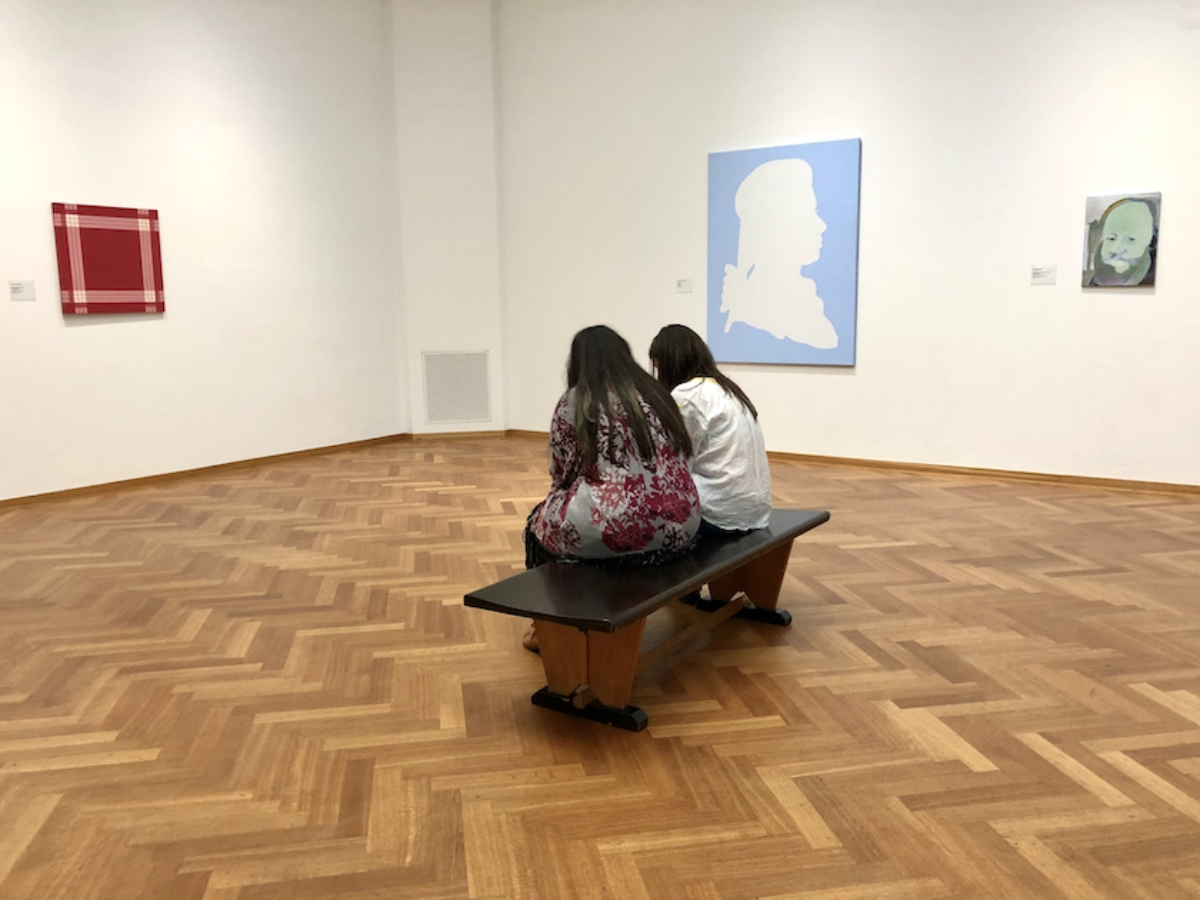
Back into the Art Museum, this time to experiment with the concept
We turned the key ideas into a low-fidelity prototype, a concept design. A concept or prototype doesn’t have to be perfect. It’s a tool for learning, for gathering feedback from your target audience, even before you’ve invested a lot of time and money in your design.
We took the concept into the museum. School pupils tested the ideas and told us what they thought of them. We observed how they used it, how they worked together, and how they moved through the museum.
‘You’re allowed to go out on your own, after all. It’s just fun. It’s a kind of trust in our independence. Although you really can’t choose everything yourself… You do have some choices, though.’
‘This can really take you by surprise. I’d never choose a woman in a crazy dress myself. But in the end, it turned out to be really interesting. It’s a way of getting to grips with something you wouldn’t have chosen yourself.’
‘I do usually look at art. But I don’t ask myself any questions. I do now, though.’
By experimenting directly in a real-world setting, we were able to determine which features, design elements and content needed to be included in the final design to really resonate with both the pupils and the museum. We worked step by step towards a solution that is truly worthwhile: a digital interaction that works in every respect.

Want to involve customers in your design process?
Lia Bardoel — Lead Service Design & Innovatie
Send message via LinkedIn lia.bardoel@valsplat.nlAuthors
-

-
