We often say ‘the government’, but the government doesn’t actually exist. The government consists of all sorts of organisations, all sorts of smaller authorities.
And that isn’t always easy for citizens. Sometimes you can’t see the wood for the trees. It’s not clear where to turn. There are hundreds of websites, all of which look slightly different. You don’t feel as though you’re dealing with a single government.
That needs to change. And the government itself agrees. That’s why they’ve launched various initiatives, including NL Design System.
In this case study, we’ll take you through the methodology and the idea behind the NL Design System. We believe there are valuable lessons here for anyone working in Digital.
Why does the government need a Design System?
Every government organisation has its own tasks. Yet there is a great deal of overlap in the online services they offer – from forms to ‘case management systems’. They face similar challenges and use similar tools. This overlap makes collaboration a logical step. But it still happens far too rarely.
Until now, government bodies have mainly developed solutions, websites and apps within the confines of their own organisations. This leads to inefficient development and a fragmented digital landscape – one in which citizens sometimes find it difficult to find their way around.
With the NL Design System, the government aims to turn this around.
A quick refresher: what is a Design System?
A Design System is many things at once. A Design System clarifies the approach to developing interfaces within an organisation. It is a methodology, a toolbox. It comprises code, design and guidelines – covering, for example, accessibility, typography, colour schemes, components, patterns and templates.
A Design System sets out the standard approach to developing interfaces within an organisation.
NL Design System helps the government to break down barriers. It provides all teams working on digital projects with the same building blocks. This brings consistency and clarity to the government’s digital services. It ensures better accessibility and greater inclusivity. More user-friendly products. And, not least: a government that can work more efficiently. The best way to explain exactly what this efficient working entails is through an example from our designer Jeffrey, who is involved in the NL Design System:
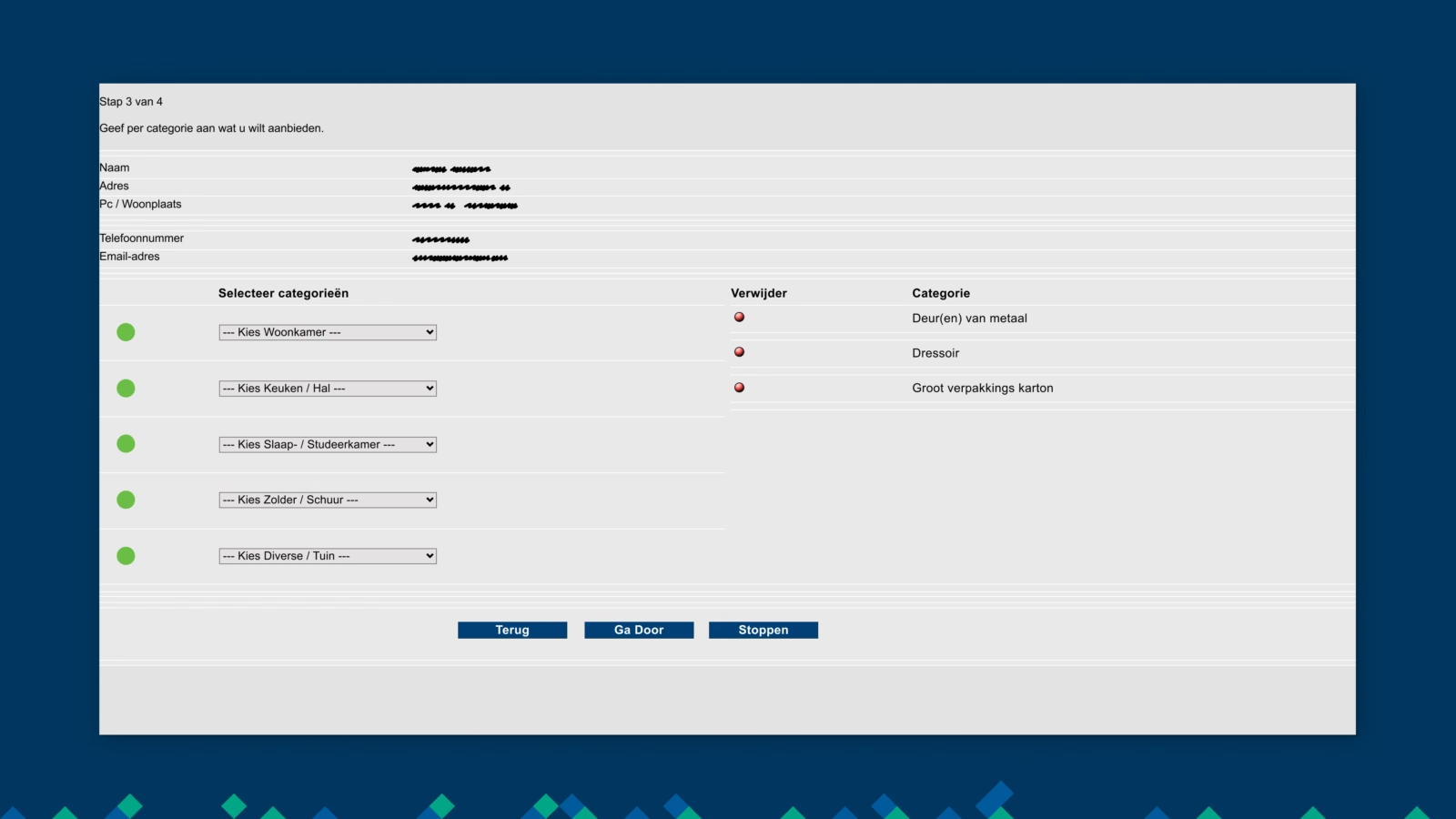
‘When I try to book waste collection in Purmerend, I end up with a really complicated form. And I’m digitally literate – I always wonder what it must be like for someone who isn’t.
For those local authorities – local authorities like Purmerend – the NL Design System is absolutely vital. It ensures they can benefit from what other local authorities with greater resources are developing.
The ‘big boys’ do the hard work. Smaller local authorities, with a smaller budget, may not have in-house designers or developers. But thanks to the NL Design System, they can still make use of what’s been developed by others. ‘Ultimately, we want to provide them with a complete set of components, patterns and templates, so that all they need to do is apply their own corporate identity.’
How do you create a Design System for a massive organisation like the government?
Building a Design System is, by definition, a major project. But in the case of the government, it carries even greater weight. There are countless stakeholders and numerous organisations. How do you make such a project manageable? How do you ensure that the various government organisations actually start using it? The key lies in the composition of the team and in the way we work together.
A core team supported by a large, flexible community
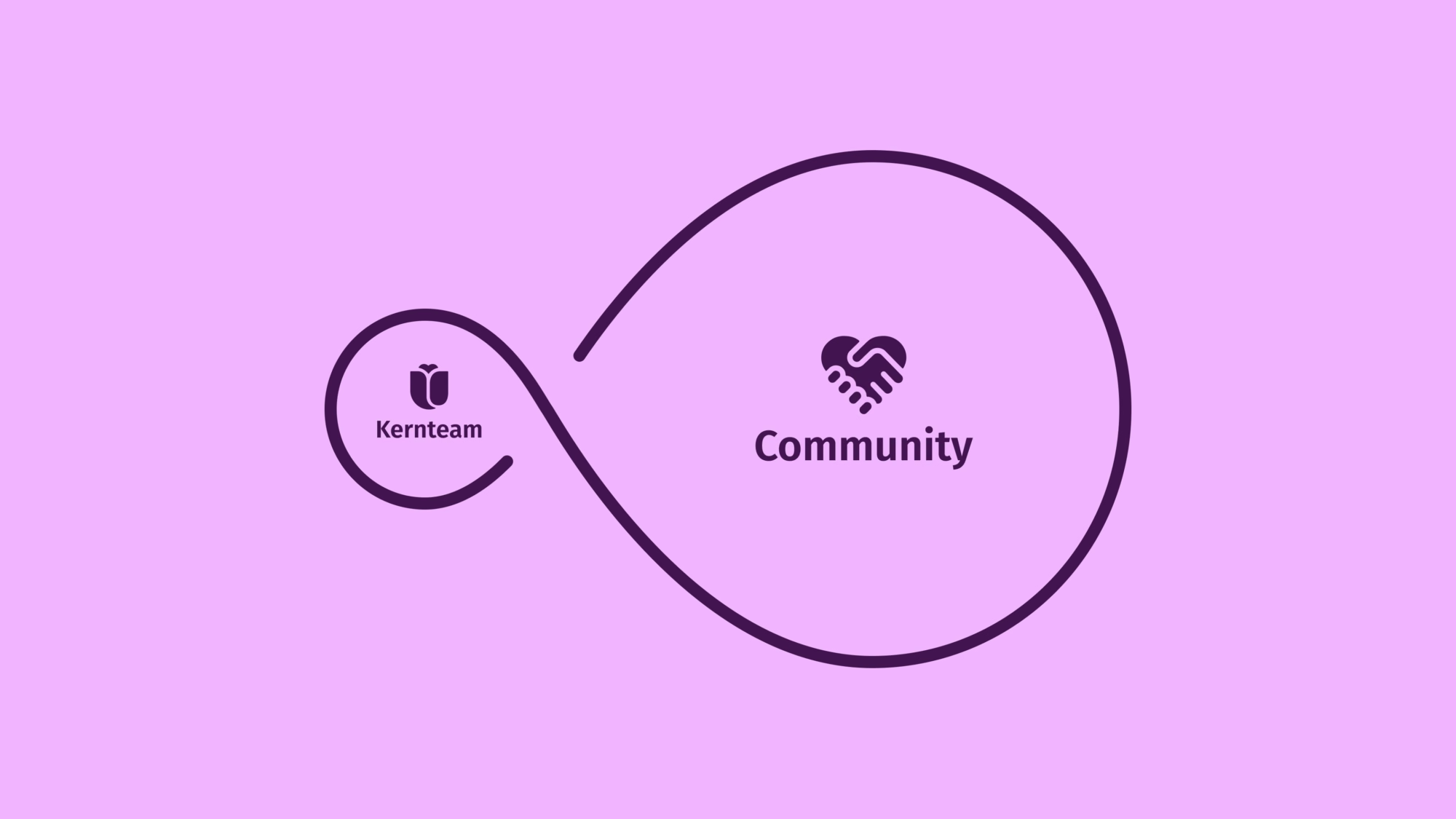
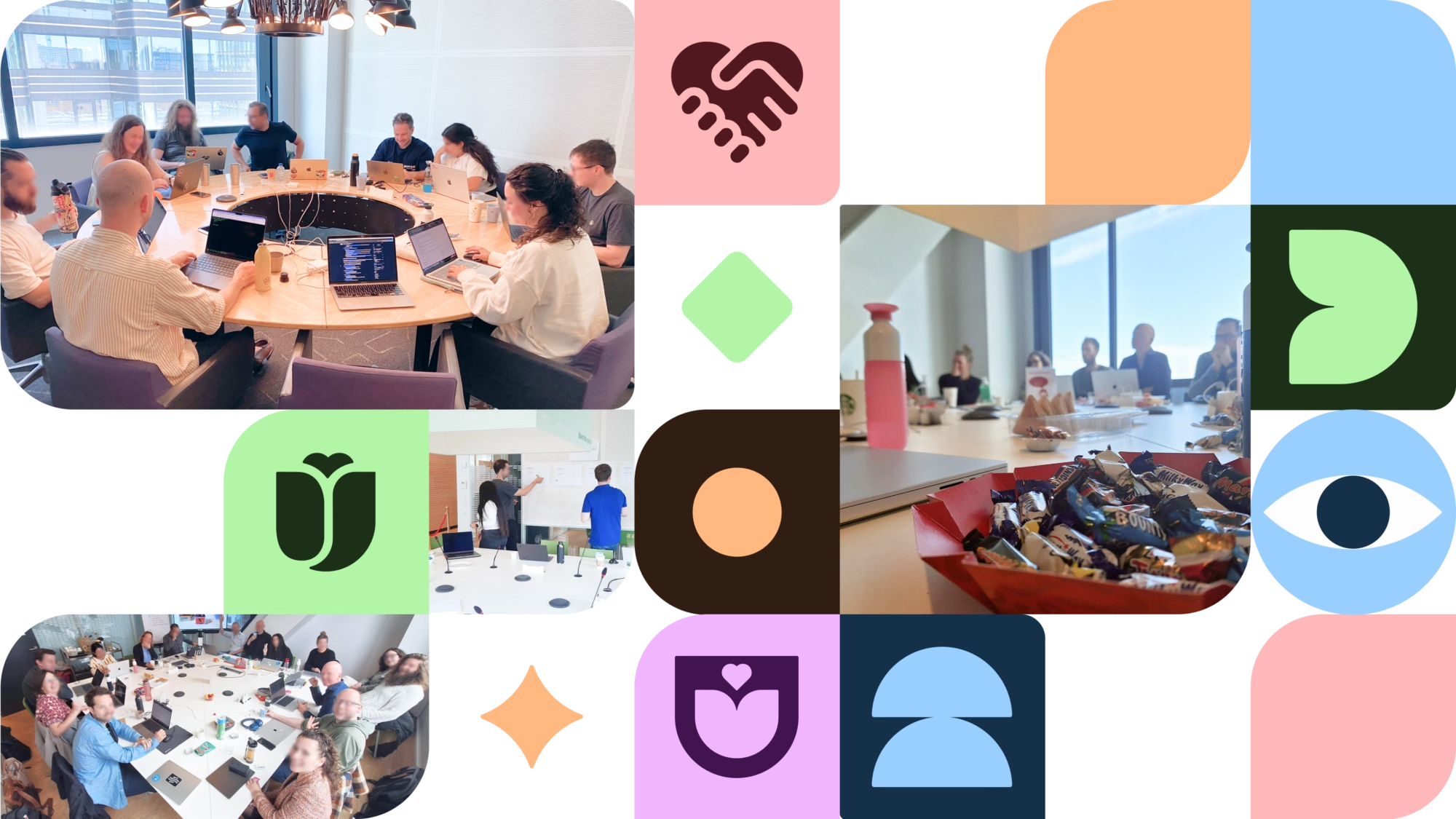
The Design System team consists of a core team, supported by a large community of specialists who all play their part.
The core team includes developers, accessibility experts and designers. They oversee the structure, encourage collaboration and ensure that NL Design System is moving in the right direction. They shape the backlog and devise guidelines. But they don’t actually build anything themselves – that’s what the community is for.
The community consists of a large group of enthusiastic people, ranging from designers and researchers to developers and product owners. They come from all walks of life and work for public sector organisations such as Utrecht City Council, Amsterdam City Council or the central government. In short: anyone who has the capacity can help build it.
This open way of working has a number of advantages over working within a tightly defined Design System team:
- Knowledge is shared more easily. By working not only with a core team but also with a community, you ensure that everyone can get involved. Knowledge is shared much more easily. Organisation X may have already carried out research into a particular topic. Organisation Y can reap the benefits of that.
- Greater ownership and engagement. The core team is in charge. They set the guidelines, but they don’t act as a barrier. Everyone in the community is welcome to contribute at any time: whether through code, design or knowledge. You can simply get started. This fosters a sense of ownership. It fosters engagement. It ensures happy ‘users’ of your Design System. And that, in turn, helps with adoption.
- A boost for team spirit. Working together is always more fun than working alone. Working on a project with such a large group strengthens team spirit and the sense of connection between government organisations and departments. Everyone feels they can make a contribution.
We are aware of each other’s work
New components, patterns or guidelines do not simply end up in the NL Design System. Everything follows the relay model. It starts with a request on the backlog. This is taken up by someone from the community and developed in accordance with the Design System guidelines. Every component is thoroughly checked by the core team. Does it comply with the guidelines? Is it accessible?
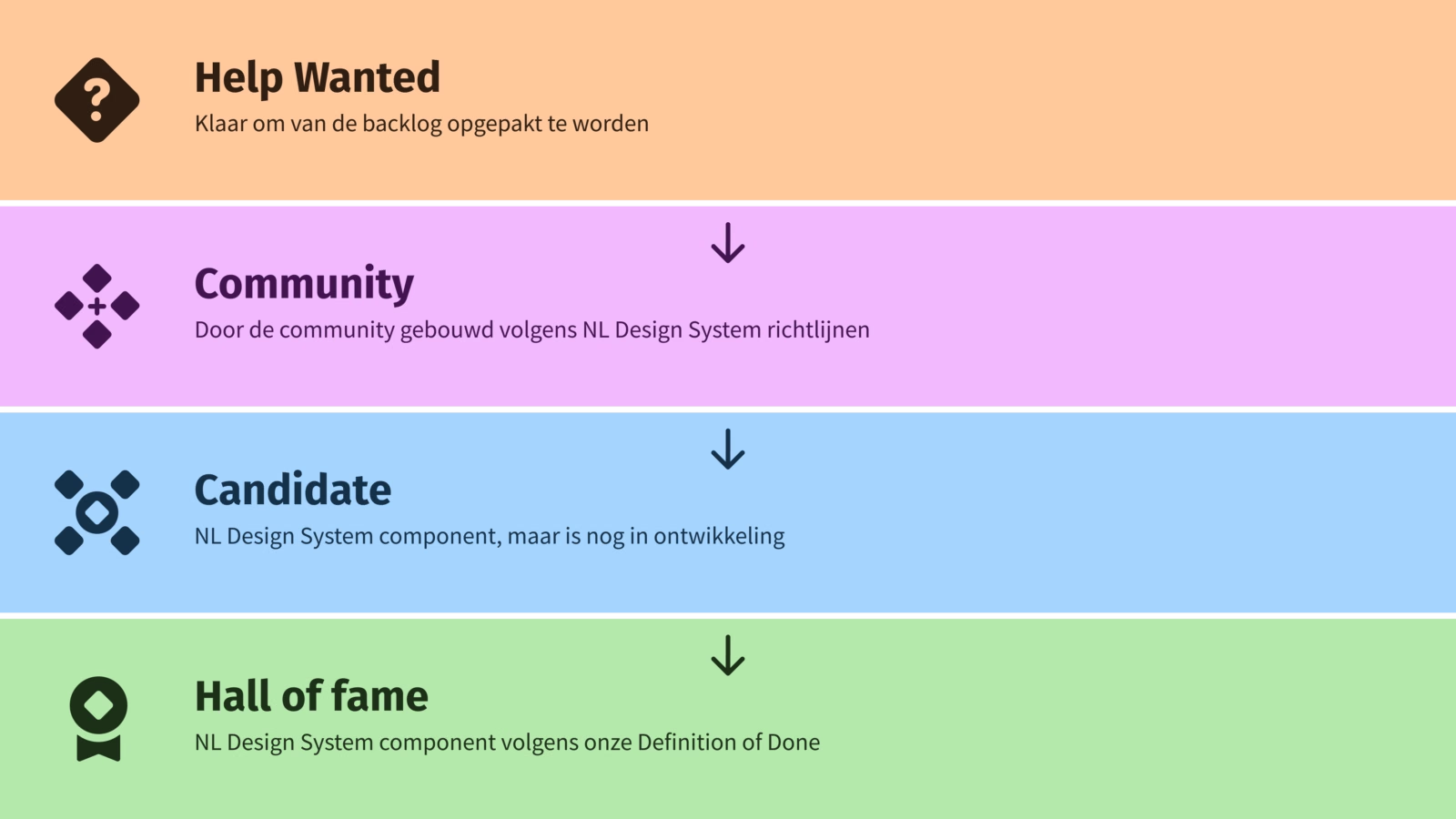
When someone takes on a task from the backlog, the rest of the community can see that work is being done on it. This helps us avoid duplication of effort and encourages collaboration: ‘Oh, are you working on a “date picker”? I did some research into that once.’ But it goes further than that: during a research project, a designer from The Hague City Council created the prototype, a researcher from Utrecht City Council conducted the interview, and designers from various organisations observed the process. After the research, the results were published on gebruikersonderzoeken.nl – the platform where we collect our research – so that everyone in the community could see what we’d learnt.
During a research project, a designer from The Hague City Council created the prototype, a researcher from Utrecht City Council conducted the interview, and designers from various organisations observed the process.
To ensure we stay in touch, there are all sorts of regular meetings. For example, every two weeks there’s a ‘Design Open Hour’. We meet online for an hour. We discuss design issues. We share knowledge. We gather feedback.
Consistent, yet different
Over time, the NL Design System will ensure that citizens’ digital experience is consistent across all public sector organisations. It makes government services recognisable, user-friendly, accessible and inclusive. However, just because something is consistent does not mean that every local authority or organisation looks exactly the same.
On the contrary: components, patterns and templates can function consistently whilst still having their own visual style. To achieve this, we use design tokens. Design tokens ensure that every public sector organisation can easily pick up components and apply its own style to them. So there is still scope for each organisation’s unique character, but based on the same, consistent foundation.
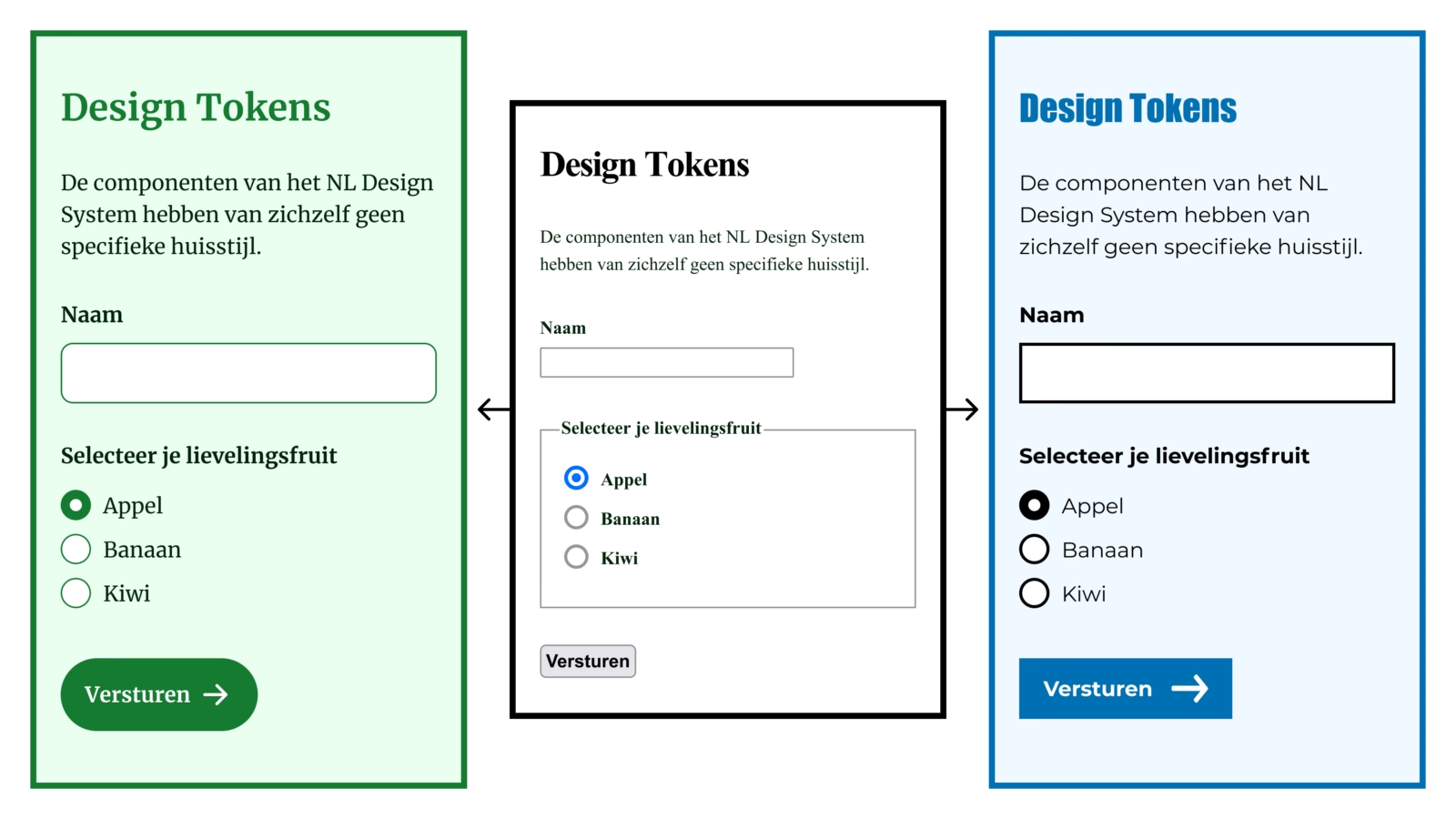
There is still scope for each organisation to retain its unique character, but on the same, consistent basis.
What you can learn from the NL Design System
We could write a book about the NL Design System and delve deeper into the details. But to keep things manageable, we’ll highlight three things we think are particularly strong about this project. These are three things you can adopt without hesitation when developing your own Design System:
#1 Accessibility first
Before a component is finally included in the Design System, it is thoroughly tested. First of all, we’ve set out best practices in the documentation. For example, you must be able to navigate through it using the Tab key, and a screen reader must be able to read it. We also conduct user research with people with disabilities – for example, those with visual impairments or those with language difficulties. No component goes live without being tested for accessibility.
#2 Working with open source
Nothing happens behind closed doors within the NL Design System project. Everything is transparent. Anyone can take a look behind the scenes – including you. Figma files, code, research insights, Slack: everything is available for everyone to view and reuse. Of course, open-source development is relatively easy for the government – there’s no commercial interest, no competition that might come along to take a peek. We understand that, as a commercial organisation, you can’t make everything open source, but you can at least do so in part. Working with open source has great benefits. For example, it can help attract designers who are keen to come and work for you. Or an accessibility expert can proactively check your code and iron out any errors.
#3 A large, open community
The NL Design System provides clear guidelines, but it never gets in the way. It doesn’t stop teams from designing things themselves. So, for example, if the City of Amsterdam wants to develop a component? That’s perfectly fine. But it must be done using the architecture we’ve devised as a community, so that it can be incorporated into the Design System. By working with a core team and an open community, we empower people to get involved.
Why we think this is such a great job
There is a great deal of investment going into the digitalisation of the public sector. We believe it is important that this is done carefully, and that the investments made contribute to a government that is easy to find and accessible. A government that excels digitally and sets the standard for the private sector in every respect. So these are the projects where we can make a difference, where we can leave our mark. And that makes us happy.
Do you want to create a successful design system?
Nils van den Broek — Founder

Authors
-
