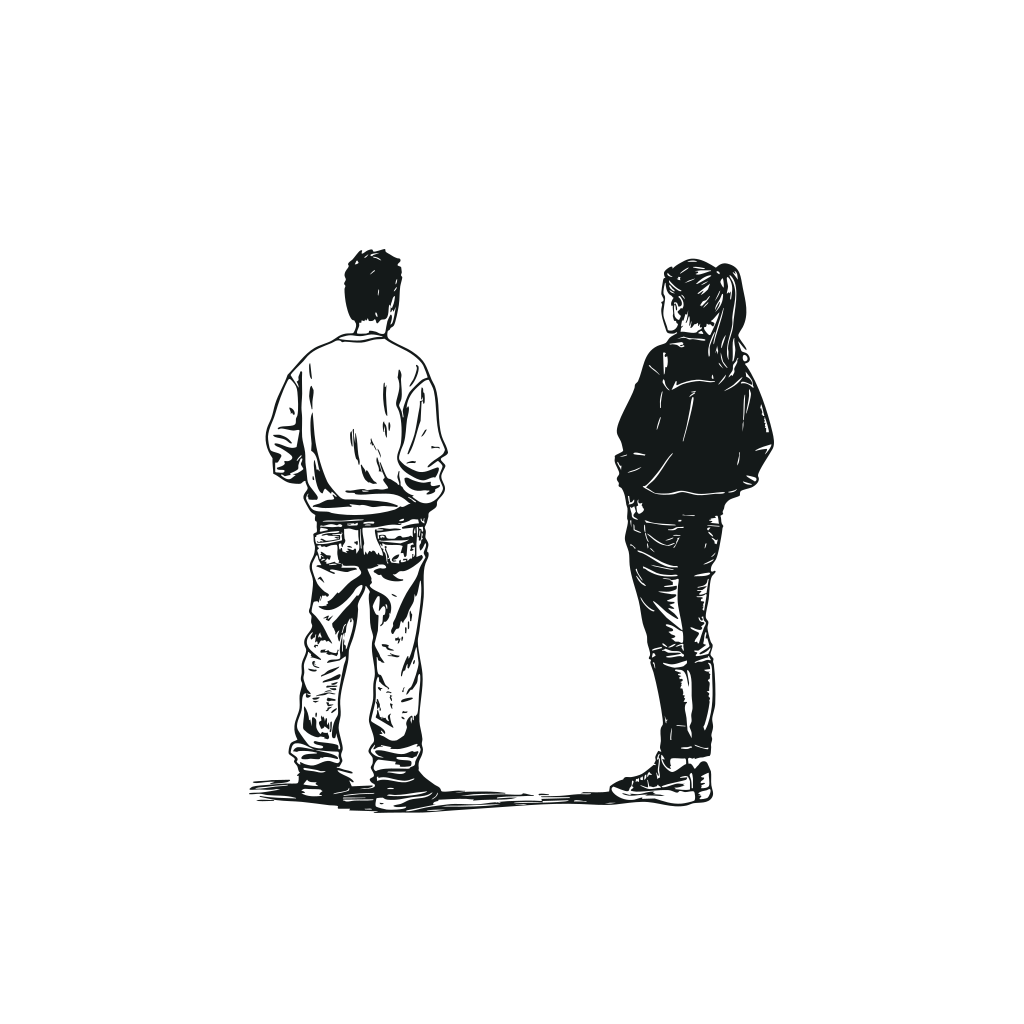
Digitalisation is happening at breakneck speed. And that opens up a whole host of possibilities.
We no longer have to wait for the shop to open: we can shop online whenever we like. We can withdraw money from our savings account whilst queuing at the supermarket. If we want to sell something second-hand, we can reach thousands of potential buyers. And if we want to know what time we need to catch the train, we just open the railways app and find out in a matter of seconds. There’s a wealth of knowledge and information at our fingertips: two clicks and we’ve learnt something new.
There are millions of Dutch people who, for a variety of reasons, are unable to keep up – either only to a limited extent or not at all.
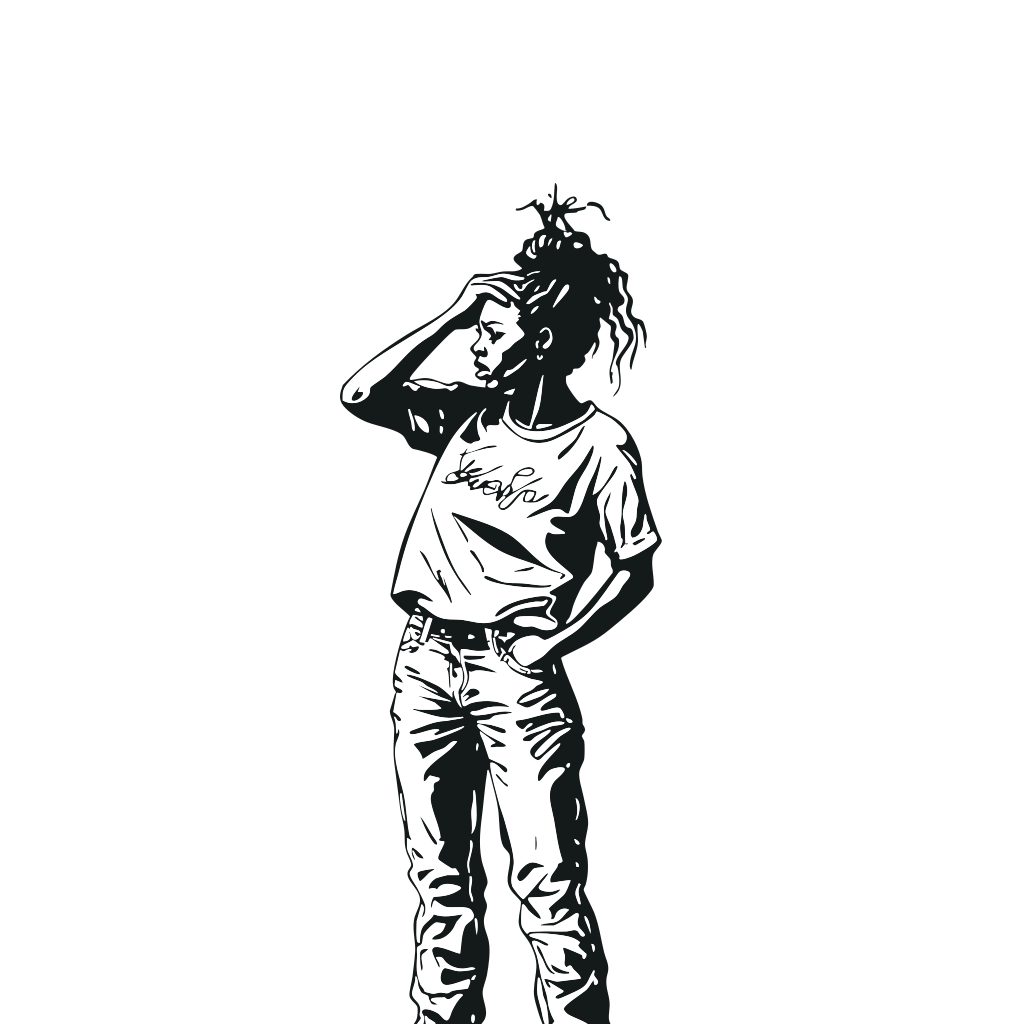
Digitalisation has brought us many benefits; there’s no doubt about that. But as always, there’s a downside: not everyone can keep up with the pace at which digitalisation is changing the world. Those with digital skills are making rapid progress. But those who cannot keep up are falling further behind. Life is becoming more difficult for these people. They are forced to do more and more online, but for all sorts of reasons, they are not always able to do so. This creates a divide – a digital divide.
And that divide is not a small one: four million Dutch people are struggling to keep up with the pace at which everything is moving online. As creators in the digital world, we therefore have a great responsibility and an important task. We must do everything we can to narrow the divide, so that no one is left behind.
Shall we work together to bridge the digital divide?
Four million Dutch people are at risk of being left behind. You can make a difference. We’ll help you make your digital product or service truly inclusive.
Technology is by no means accessible to everyone
Relatives who can’t get to grips with DigiD, your partner who can no longer operate the thermostat, music system or TV at home: we all see people struggling with digital technology from time to time. But the digital divide is about more than simply not understanding the app for your smart hoover. It’s a much more fundamental issue.
The digital divide is, first and foremost, a question of access. Without access to technology, it is difficult to participate in our society. Many people in the Netherlands are experiencing this. For families on lower incomes, for example, having devices and an internet connection is not a given. This has serious consequences: children with limited access to technology at home have fewer opportunities in an education system that is becoming increasingly digital. And even if they do have access, it is not necessarily good access. Many people have old laptops, tablets and phones, slow connections and no unlimited data plan. As a result, they are unable to use nearly all apps or online services. And if they only have a smartphone, they run into difficulties with products and services designed solely for large screens. Even if you have high-quality internet access and devices, that doesn’t mean technology works for you. Sometimes the skills are lacking, or physical or mental limitations get in the way.
Careless, ill-considered digitisation is having real-life consequences for a large group of Dutch people.
Someone with osteoarthritis may find it difficult to type or use the small buttons on a touchscreen. Or take the large group of Dutch people who are functionally illiterate. The online world is full of text, so if you struggle to read, it’s by definition very difficult. Sometimes you’d rather speak to someone on the phone with whom you can simply have a chat. The same applies to people who struggle with their own paperwork. In our digital society, they become even more marginalised. There’s no one left to notice they’re struggling, no one to give them a helping hand. No counter or shop assistant to give them a nudge when things aren’t working out.
Meanwhile, more and more organisations are opting for a digital-only approach. Shops are closing or never opening in the first place. Sales and helpdesk staff mainly do their work via chat, or they’re being replaced by AI bots. Due to an ageing population and staff shortages, the healthcare sector, education, utility companies and public authorities are also increasingly looking to offer their services exclusively online. Nevertheless, we must proceed with caution. Careless, ill-considered digitalisation has real-life consequences for the social opportunities, well-being and even the health of a large group of Dutch people.
This is how we narrow the gap
We love technology. We believe it can do wonderful things. Digitalisation makes all sorts of things possible that were previously impossible or difficult. It contributes to a well-oiled society in which people can fulfil their potential to the full and help build a better future. But technology is by no means always developed with due care. And that’s when a gap emerges.
If we want to narrow that gap, we as creators need to bear three things in mind.
Firstly, every digital product must be accessible: simple and user-friendly. This goes beyond simply complying with accessibility guidelines and regulations. Bear in mind, for example, that not everyone has the latest iPhone; some people are still using a device that’s eight years old.
Realise that some people have limited access to the internet, or that their connection is of poor quality. Ensure that what you create works for them too. Furthermore, it is important to use clear, plain language so that your service or product is understandable to everyone. If you get this right, you’ll already be excluding far fewer people.
Furthermore, there must always be a non-digital alternative for every application. Digital is no excuse to shut down physical channels entirely. Don’t hide your customer service behind an AI chatbot: by no means can everyone articulate their query properly. An offline point of contact is always needed for people who struggle with digital channels. If you can help 80% of your users online, this creates scope to provide personalised support to those for whom that channel doesn’t work.
And finally: lend a helping hand. An accessible product and offline alternatives form the basis. But if you want to tackle bridging the gap seriously, proactively seek out people who are struggling with your product. Support them – it makes a difference. You’re helping someone get back on track, and you’re learning how to further improve your product or service. It’s a win-win.
As creators in the digital world, it is our responsibility to ensure that our tech-optimism does not go too far and lead to exclusion or inequality of opportunity. There are millions of Dutch people who, for a variety of reasons, are unable to keep up – either fully or at all. The impact of our work extends far beyond screens and buttons. So, in everything we design and develop, we must always ask ourselves critically: are we narrowing the gap through what we do? If not, then we have a moral duty to do things differently.
Shall we work together to bridge the digital divide?
Four million Dutch people are at risk of being left behind. You can make a difference. We’ll help you make your digital product or service truly inclusive.
A human standard in the digital world



If it moves us, we're in
A few times a year, we offer our expertise and creativity on a pro bono basis for projects that resonate with us and where we can add value.

Will you be our next impact case?
Does your challenge align with our mission? Let us know – there might be a great opportunity for collaboration.

It’s nice to meet you
Nils van den Broek — Founder
Send message via LinkedIn Schedule a meeting nils@valsplat.nl