We believe that good design requires insight. ‘Design by insight’ is our approach to combining research and design in a continuous process. We listen to users, test ideas at an early stage and continue to refine them throughout the entire process.
This prevents the organisation’s internal processes, wishes and assumptions from dictating the design process. Because that leads to friction: unnecessary steps, confusion and, above all, solutions that waste time rather than adding value.


Would you like to incorporate Design by Insight into your project?
Send message via LinkedInDiscovery and delivery
Design by Insight consists of Discovery and Delivery. You are either discovering what you need to design, or you are developing it to the best of your ability. And that is a continuous process.
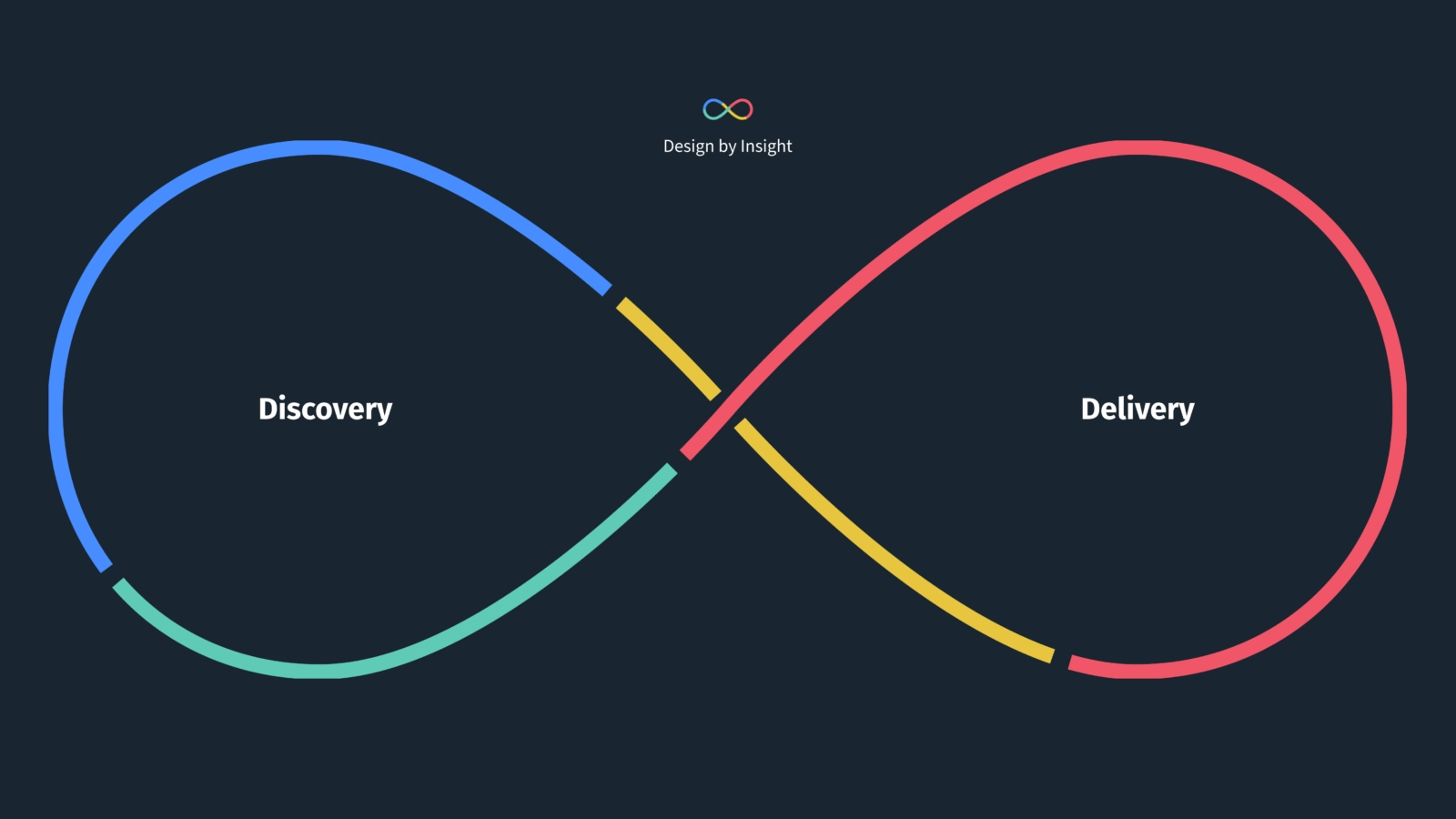
Discovery
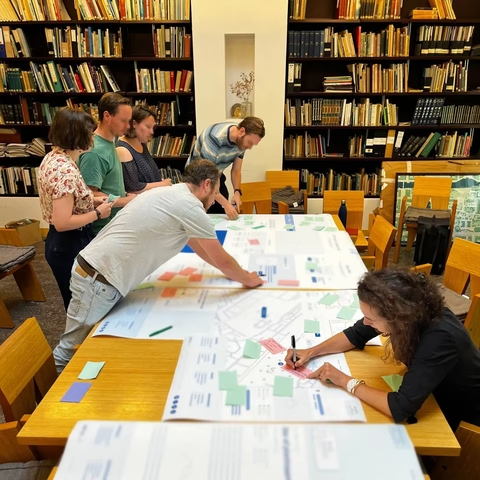
During the discovery phase, we get to know your users inside out. We immerse ourselves in their world, investigate what they need and set the direction. Naturally, we also pinpoint exactly where your organisation wants to go. We devise solutions, design concepts and test them at an early stage. This ensures that a product is fundamentally sound before we start building it.
What we do includes: user research, exploratory research, stakeholder interviews, workshops, customer journey mapping and concept development.
Delivery
In the delivery phase, we focus on refining and optimising your product or service. The foundations are in place; now every interaction needs to be just right. It must be intuitive and easy to use. We carry out tests in our lab. We learn how customers experience your product. We launch it and see how it’s actually used. We refine it. Time and time again. Until your digital service or product is rock-solid.
What we do: UX/UI design, design systems, (Neuro) UX testing, support with implementation and further development.
Here's how we did it
-

An offline organization, now digitally mature.
BNG Bank
-

Watch and listen to your visitors; only then will you find the right route
ARTIS

-
Sustainable sleep starts online
Auping

-
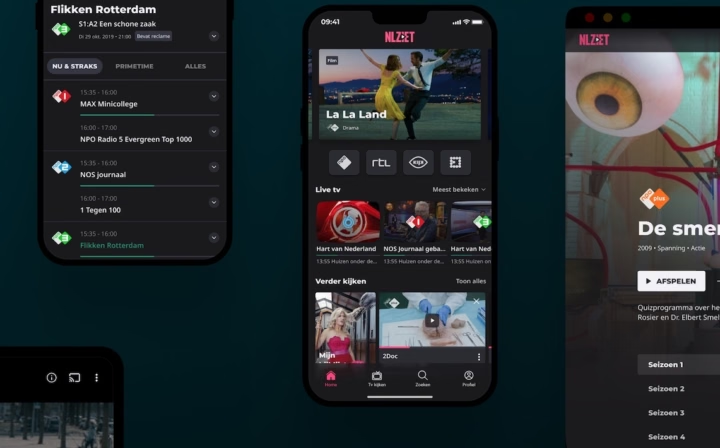
A redesign with the viewer at the heart of it
NLZIET
Design by insight as a tool for a more human digital world
Digitalisation is having a major impact on society. And that impact is not always positive. Too many digital products and services waste valuable time, exclude people or simply add no value.
As researchers and designers, as creators of digital products, we feel a great responsibility to do better. We ensure that our products are valuable, that they do add value. That they are accessible and exclude no one. The digital divide is growing – with every project, we try to narrow it a little further.
What are the benefits of Design by Insight?
Design by Insight helps us make better choices, from the very beginning right through to well after launch. Because we design based on insight rather than assumptions, we reduce the risk of building something nobody wants. This prevents rework, speeds up decision-making and leads to digital products that work more logically, better meet user needs and deliver greater value to the organisation.
So you only look at users?
No. Users are at the heart of it, but we always consider the organisation as a whole. What are the objectives, where does the organisation want to go, which decisions are strategically important, and what constraints are at play? Only by bringing these two perspectives together – that of the users and that of the organisation – can we design solutions that are not only a pleasure to use, but also genuinely contribute to progress, growth or change.
Does this approach only work for large or complex projects?
We apply the same way of thinking to both large and small projects. Sometimes this involves an extensive discovery phase with a great deal of research and multiple iterations. Sometimes a more streamlined approach is enough to quickly set a direction and make targeted improvements. The core principle remains the same: first understand what is needed, then design, test and refine. This is particularly important in smaller projects, as it prevents unnecessary work and poor decisions.
Let's have a chat
Bjorn Post — Lead UX Research & Product Design